 Árbol InteriorThe project
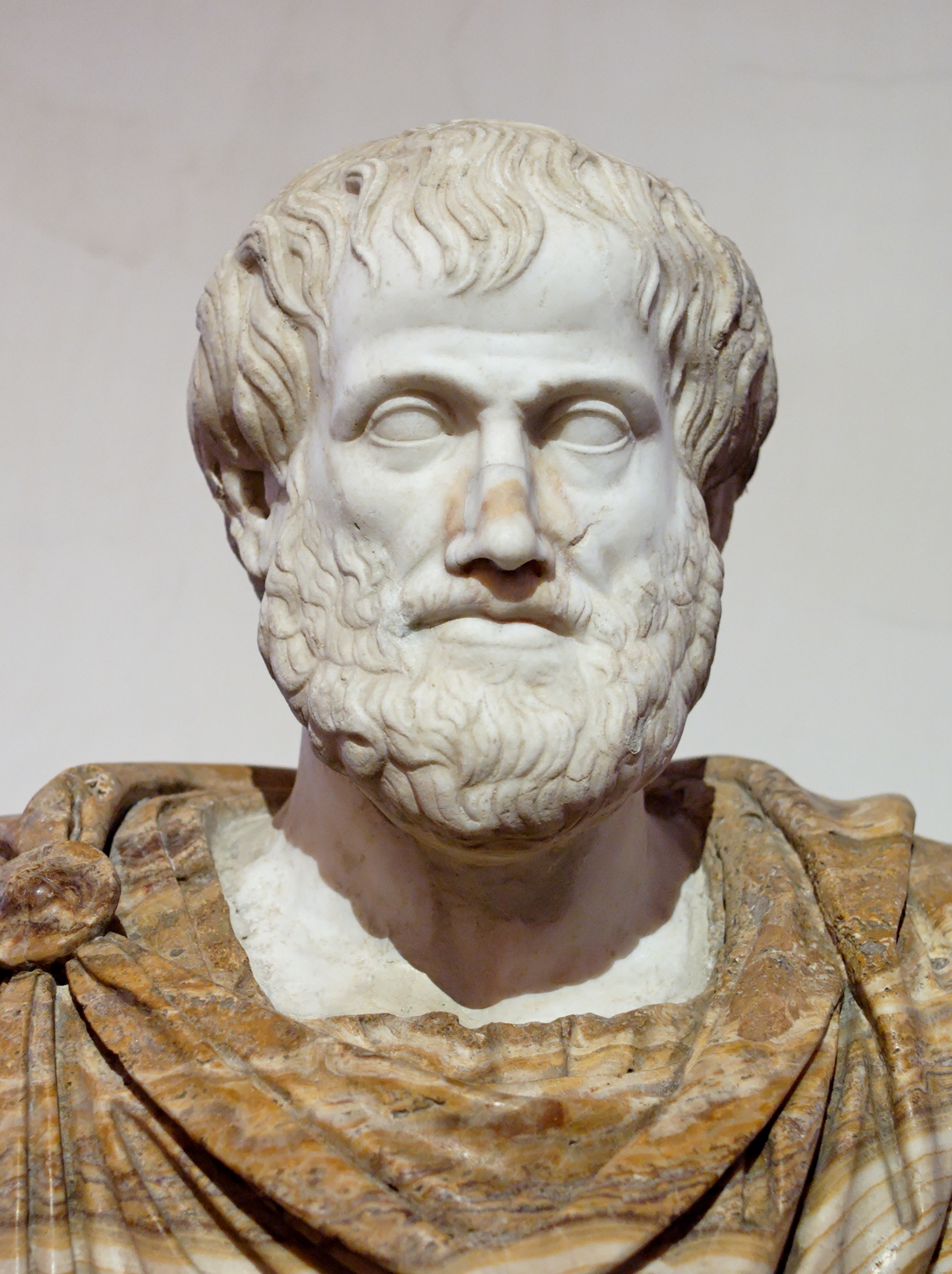

A question for a lifetime
What makes a life good? Aristotle proposes exploring that question by looking at our actions, our desires, and our life together. This introduction to the Nicomachean Ethics explores how character develops, how we choose, and the place of friends in a flourishing life.
You do not need to have read Plato first. The two paths can be followed separately and brought into conversation at the end.
The structure of the work
The work contains ten books, each divided into chapters. This path presents the main problems and arguments of each book.
References use book and chapter numbers. “II, 6” means book two, chapter six. Some editions also include Bekker numbering, which is useful for comparing translations; it should not be confused with the page number in your copy.
Complete text in Spanish: read or download the Nicomachean Ethics (Spanish PDF). Translation by Pedro Simón Abril, 1918 edition, in a modernized version from the Biblioteca de Traducciones Hispanoamericanas. The links for each book open this same complete PDF; whether they jump to the specified page depends on the viewer.
Book I
What it means to live well
Read book I in Spanish (complete PDF)
Aristotle begins by observing that our actions pursue some good. Medicine seeks health; other activities produce tools that serve to achieve further aims. This relationship between means and ends leads to the search for an ultimate end that guides life as a whole. The inquiry belongs to politics because politics orders the community’s activities and concerns itself with the human good. Its purpose is practical, and the variability of human affairs means that we cannot always demand the precision of a mathematical proof (I, 1–3).
Most people call this end happiness, or eudaimonia, but disagree about what it consists in. Aristotle examines the life centered on pleasure, the pursuit of honor, and the instrumental value of wealth. Honor depends on those who grant it; wealth is sought for the sake of other things. Chapter 6 also discusses the idea of a separate, universal Good: even if it existed, it would remain to be explained how knowledge of it would guide us toward the particular goods of action (I, 4–6).
Happiness must be desirable for its own sake and make life worthwhile as a whole. Its self-sufficiency does not mean isolation: it includes life with family, friends, and fellow citizens. To specify what it consists in, Aristotle proposes the human function argument. Just as we value a musician for performing their activity well, he looks for what characterizes human activity. He finds it in a life that involves reason, both in thinking and in guiding desires and actions (I, 7).
He therefore describes the human good as activity of the soul in accordance with virtue and, if there are several virtues, in accordance with the best and most complete, over a complete life. Virtue expresses the excellence with which we exercise our capacities. Possessing a good disposition without exercising it does not amount to living well, just as one favorable day is not enough to judge an entire life. The next book will develop an account of how these dispositions are formed; here, the place of activity is established (I, 7–8).
The good life also needs favorable external conditions. Friendships, resources, and certain opportunities enable us to act well; great misfortunes can damage it even when a virtuous character is preserved. Aristotle studies the stability of happiness in the face of changing fortune and the possibility of judging it during a person’s lifetime. Good activities provide continuity, but human happiness remains vulnerable. The inquiry even extends to how much it can be affected by events that happen to family and friends (I, 8–11).
The closing chapters distinguish the recognition owed to happiness from the praise of particular qualities and prepare the study of virtue. Aristotle distinguishes the rational dimension of the soul from the part that, without reasoning for itself, can listen to reason. This distinction allows him to introduce intellectual virtues and virtues of character. Book I thus provides the framework for the treatise: understanding what makes a life good in order to examine the capacities and dispositions that make it possible (I, 12–13).
Reference passage: I, 7; the human function argument, 1097b22–1098a20.
Book II
Character is formed through action
Read book II in Spanish (complete PDF)
Book II explains how we come to have a character. Aristotle distinguishes intellectual virtues, whose development requires teaching, experience, and time, from virtues of character, which are acquired through habituation. We naturally have the capacity to acquire them, but that capacity needs cultivation. Much as someone learns a craft by practicing it, we become just by doing just actions and courageous by facing what we fear in the appropriate way (II, 1).
Repetition alone does not guarantee good formation. Bad habits are acquired too. The direction of our actions and the education we receive matter, both in personal life and in the city. This is why the purpose of the inquiry is practical: understanding virtue should contribute to living better. Aristotle warns that the circumstances of action vary and that no general formula can settle every case in advance (II, 2).
Pleasure and pain reveal how character has been formed. One person may fulfill an obligation with deep reluctance; another may find satisfaction in doing what is appropriate. Ethical education extends to these emotional dispositions: learning to enjoy what deserves to be enjoyed and to reject what ought to be rejected. Virtue does not consist in suppressing all emotions, but in giving them an appropriate direction (II, 3).
Aristotle then distinguishes performing an action that outwardly appears just from acting as a just person acts. For the latter, the agent must know what they are doing, choose the action for its own sake, and act from a firm disposition. Getting something right by chance, or behaving in a certain way solely to avoid punishment, does not yet reveal a virtuous character. Virtue is an acquired disposition, not a passing emotion or the mere capacity to feel (II, 4–5).
The account of the mean brings these elements together. Virtue chooses what is appropriate between excess and deficiency, attending to the person, the occasion, the motive, and the manner of acting. This mean is relative to us, but is not left to individual taste: reason determines it, as a person with practical wisdom would determine it. In relation to what is best, virtue is an excellence, not a mediocre compromise. Moreover, there are actions, such as theft or murder, whose very names imply wrongdoing and which admit of no virtuous mean (II, 6).
The final chapters offer examples and show why getting it right is difficult. The extremes do not always stand in the same relation of opposition to the mean, and our inclinations may draw us closer to one of them. The recommendation to recognize those inclinations prepares the later study of choice and practical wisdom. The book leaves us with a central idea: character is formed through particular actions, but acting well requires a cultivated sensitivity to particular circumstances (II, 7–9).
Reference passage: II, 6; the definition of virtue and the limits of the mean, 1106b36–1107a27.
Book III
Choosing and taking responsibility
Read book III in Spanish (complete PDF)
Book III begins with the conditions that allow an action to be attributed to the person who performs it. Praise, blame, and forgiveness require a distinction between the voluntary and the involuntary. Aristotle calls something forced, in the strict sense, when its origin lies outside the agent and the agent contributes nothing to it. Ignorance of particular circumstances can also make an action involuntary, especially when it subsequently causes regret. Acting in ignorance and acting because of ignorance are not always the same (III, 1).
Situations involving pressure complicate the distinction. Throwing cargo overboard during a storm would not be desirable in itself, but may be chosen to save those traveling on the ship. Aristotle describes such actions as mixed and closer to voluntary actions when considered at the moment they are performed. His analysis acknowledges the weight of circumstances without treating every difficulty as automatically removing responsibility (III, 1).
Choice, or prohairesis, has a more specific place than the voluntary. Children and animals also perform voluntary actions, but this does not mean that they deliberate and choose in the sense at issue here. Wishing for an outcome is not the same as deciding how to act. Choice brings together desire and deliberation about what is in our power (III, 2–3).
Deliberation starts from an end and examines what leads to it. We do not deliberate about what is necessary, about the past, or about things we cannot bring about. We look for practicable steps, working backward from the outcome to an action we can initiate. In discussing desire for the end, Aristotle adds that each person’s character influences what appears good to them. Responsibility thus extends to the formation of our dispositions, even though these, once established, cannot be transformed by a simple decision (III, 3–5).
The second half studies courage. Its central case is facing the danger of death in battle for a noble reason. The courageous person feels fear but faces it appropriately; courage is not defined by the absence of fear. Aristotle distinguishes this disposition from conduct that may look similar, such as acting from shame, military experience, anger, overconfidence, or ignorance of the risk. Motive and judgment matter as much as visible behavior (III, 6–9).
The book ends with temperance, which concerns chiefly certain bodily pleasures of touch associated with food, drink, and sexuality. The temperate person desires these pleasures in accordance with reason and the needs of a good life. Intemperance consists in pursuing them inappropriately; insensibility is an uncommon deficiency. After examining who acts and how they choose, Aristotle shows how character orders both fear and appetite (III, 10–12).
Reference passages: III, 1; the voluntary, force, and ignorance, 1109b30–1111b3. III, 3; deliberation and choice, 1112a18–1113a14.
Book IV
Virtue in everyday encounters
Read book IV in Spanish (complete PDF)
Book IV takes the inquiry into everyday areas where character becomes visible: the use of money, our relationship to honor, anger, and conversation. Each virtue responds to a kind of situation. The idea of the mean serves as a guide to distinguishing ways of acting, not as an identical scale applicable to every matter.
Liberality, or generosity, concerns giving and receiving goods. It is not measured solely by the amount given: what matters is its proportion to the agent’s resources, the recipient, the timing, and the reason for the gift. Its opposing extremes are prodigality and stinginess. Magnificence concerns expenditure on a large scale, such as spending on public works or celebrations, and requires appropriateness to the occasion. Ostentatious spending can be excessive, however large the amount (IV, 1–2).
Magnanimity, also translated as greatness of soul, describes someone who considers themselves worthy of great honors and is worthy of them. Aristotle presents it alongside the vanity of those who claim more than they deserve and the smallness of soul of those who claim less. He also studies the desire for lesser honors, acknowledging that its mean lacks an established name. These passages presuppose a hierarchical society and an aristocratic ideal of recognition; they should not be turned directly into modern advice on self-esteem (IV, 3–4).
Gentleness, or mildness, orders anger. The virtuous person can become angry when there is reason, with the right person, for the appropriate length of time, and in the appropriate way. Indifference to what deserves indignation can also be a deficiency. The point is not to celebrate every kind of calm, but to distinguish a reasoned response from excessive irritation and an inability to react (IV, 5).
In social encounters, Aristotle describes a disposition resembling friendliness, which avoids both always trying to please and always contradicting others. Truthfulness regulates how we speak about ourselves, in contrast to boastfulness and false modesty. Good humor allows us to joke without becoming vulgar or rejecting all amusement. These virtues show that living well together also depends on ways of speaking, listening, and spending time with one another (IV, 6–8).
The closing chapter distinguishes shame from virtue. Shame is a feeling associated with fear of dishonor and may be appropriate in young people whose character is still developing. Yet the ideal of character is not to act badly and feel ashamed afterward. The book thus extends ethics beyond great deeds: our habitual ways of giving, seeking recognition, responding, and being with others also matter (IV, 9).
Reference passages: IV, 1; generosity and the agent’s resources, 1120b7–11. IV, 5; the regulation of anger, 1125b26–1126b10.
Book V
Living well with others
Read book V in Spanish (complete PDF)
Book V devotes a full inquiry to justice. Aristotle begins with the different meanings of injustice: breaking the law and seeking an undue advantage. In its broadest sense, justice encompasses the exercise of virtue in relation to other people. A good disposition is tested not only in one’s own affairs, but also in how one acts when the goods of others are at stake (V, 1).
Particular justice concerns equality in certain goods, burdens, and exchanges. Distributive justice regulates the allocation of honors, wealth, or other common goods. Its equality is proportional: shares should correspond to the criterion of merit adopted. Aristotle recognizes that communities disagree about this criterion, for example by giving weight to freedom, wealth, or virtue. His analysis therefore does not amount to a defense of always distributing identical amounts (V, 2–3).
Corrective justice addresses the imbalance that arises between people, both in voluntary transactions and in involuntary harms. Here the concern is to restore an arithmetic equality between loss and gain, without making redress depend on the parties’ moral standing. The figure of the judge represents this task of correcting the imbalance (V, 4).
The study of exchange adds proportional reciprocity. For different crafts and products to be brought into relation, a common measure is needed. Need sustains exchange, and money allows equivalences to be expressed and the possibility of purchasing later to be preserved. Aristotle does not reduce all justice to returning exactly what one has received: simple reciprocity can produce unjust results (V, 5).
The following chapters examine political justice, distinguish what is naturally just from what is just by convention, and specify the conditions of responsibility. Causing an unjust outcome is not enough, by itself, to describe someone as an unjust person: knowledge, voluntariness, and choice matter. The discussion is situated in the ancient political community, with its historical restrictions on who participates in it as free and equal (V, 6–9).
Equity responds to a difficulty with laws. A rule must be formulated in general terms, while life presents circumstances the legislator cannot fully anticipate. What is equitable corrects literal application where it would depart from what the law reasonably intended. This correction requires understanding the meaning of the rule, not granting oneself an exception for convenience. The book concludes by examining whether someone can act unjustly toward themselves, distinguishing relationships between people from conflicts within the agent (V, 10–11).
Reference passage: V, 10; equity and the generality of law, 1137a31–1138a3.
Book VI
Learning to deliberate well
Read book VI in Spanish (complete PDF)
Book VI returns to an expression that had remained unexplained: acting according to right reason. Saying that the mean is what a person with practical wisdom would choose still requires an account of what that capacity consists in. Aristotle distinguishes thought that studies what cannot be otherwise from thought that considers variable matters, including human decisions. Each domain needs its own form of excellence (VI, 1).
Action involves thought and desire. To choose well, it is not enough to reason correctly about how to achieve just anything: desire must also be directed toward the good. Practical truth requires agreement between sound understanding and right desire. Choice thus appears as a unity of reason and desire, rather than an isolated reason governing from outside emotional life (VI, 2).
Aristotle presents five dispositions through which we attain truth: craft or art, scientific knowledge, practical wisdom, wisdom, and intellect. Scientific knowledge concerns what is necessary and demonstrable. Craft concerns producing something whose result can be distinguished from the activity of producing it. Practical wisdom, by contrast, concerns action and living well: its end is not to make an object, but to perform a good action (VI, 3–5).
Intellect grasps the principles that a demonstration cannot itself demonstrate. Wisdom combines this knowledge of principles with scientific knowledge of the highest objects. Practical wisdom has a different domain: human goods and matters about which deliberation is possible. This difference explains how someone can possess great theoretical knowledge yet fail to judge the affairs of their own life appropriately (VI, 6–7).
Practical wisdom needs experience of particular cases. Knowing a general rule does not guarantee that one recognizes what is happening here and now. Aristotle therefore connects sound deliberation with capacities such as understanding and judgment, and examines their application to individual, household, and political life. He offers no infallible technique for deciding: he describes a competence that brings together experience, attention to circumstances, and an orientation toward the good (VI, 8–11).
The final chapters distinguish practical wisdom from mere cleverness. A clever person can find effective means to a bad end; practical wisdom requires virtue of character. In turn, good natural inclinations need judgment to become full virtue. Aristotle states that virtue makes the end right and practical wisdom makes right what leads to it, but each needs the other. The education of desire and the formation of thought converge in the same way of acting (VI, 12–13).
Reference passage: VI, 5; practical wisdom and its distinction from scientific knowledge and craft, 1140a24–1140b30.
Book VII
When we act against our judgment
Read book VII in Spanish (complete PDF)
Book VII studies situations in which character and judgment are not fully in agreement. Aristotle distinguishes vice, incontinence, and certain extreme dispositions that he describes using categories of his own time. His central problem is akrasia, translated as incontinence or weakness of will: the agent acts under the influence of a passion against the judgment they recognize as better. The analysis begins by gathering opinions and difficulties, rather than treating this conflict as already resolved (VII, 1–2).
The discussion of knowledge is decisive. Aristotle distinguishes possessing knowledge from actually using it. A person may repeat a correct formulation without that knowledge directing their action at that moment, as happens in states of sleep, drunkenness, or strong emotion. Recognizing the particular case to which a rule applies also matters. Desire can interfere with that practical recognition without permanently erasing all the agent’s knowledge (VII, 3).
Incontinence is not the same as vice. The intemperate person pursues excessive pleasure because they consider it an acceptable direction for their life; the incontinent person acts against their choice and may feel regret. Nor is self-control the same as temperance: the self-controlled person resists desires that oppose their judgment, while the temperate person’s desires are better ordered. These differences allow us to distinguish the rightness of an action from the inner state from which it is performed (VII, 4–9).
Aristotle also examines incontinence in relation to anger and bodily appetites, the weakness of someone who deliberates and then gives way, and the impulsiveness of someone who acts before deliberating. Standing firm is not always a virtue either: an obstinate person may cling to a mistaken opinion. What matters is the quality of the judgment being upheld and how it relates to desire (VII, 6–10).
The final part introduces an inquiry into pleasure that will continue in book X. Aristotle reviews arguments that regard pleasure as bad, as an incomplete process, or as an obstacle to thought. He responds by distinguishing pleasures and activities: the fact that some pleasures are harmful does not prove that all are. An activity performed well can be pleasant, and a happy life is not adequately described as a life deprived of all pleasure (VII, 11–14).
This account shows why ethics needs more than the formulation of principles. A gap can open between knowing, desiring, and acting. Habituation, experience, and the quality of our activities help us understand that gap without reducing every error to the same cause. The medical terms and cultural judgments in some examples should be read in their ancient context, not as present-day diagnoses.
Reference passage: VII, 3; possessing and exercising knowledge during action, 1146b8–1147b19.
Book VIII
Why we need friends
Read book VIII in Spanish (complete PDF)
Book VIII places friendship at the center of a good life. No one would choose to live without friends even if they possessed other goods, Aristotle maintains. Friends accompany us in prosperity, help in difficulty, and make it possible to act and think together. Friendship also holds communities together. The Greek word philia here covers relationships broader than our idea of close friendship: it includes family ties, associations, and forms of civic relationship (VIII, 1).
Friendship requires more than feeling affection for someone. There must be reciprocal, acknowledged goodwill: each person wishes the other some good, and both know that this affection is returned. Aristotle distinguishes relationships according to what is loved: utility, pleasure, or the person’s character (VIII, 2–3).
In friendships of utility, each person receives some advantage; in friendships of pleasure, they enjoy one another’s company or a shared activity. These are real relationships, although their duration depends on what sustains them. If the benefit disappears or what is enjoyable changes, the bond may weaken. This classification does not require us to disparage such relationships, but to understand what people expect from them (VIII, 3–4).
Complete friendship arises between good people who love one another for their character and wish each other well for the other person’s own sake. It is also pleasant and useful, but cannot be reduced to these advantages. It requires time, familiarity, and trust: the wish to become friends may arise quickly, while knowing someone’s character requires a shared life. Distance can interrupt shared activity without immediately erasing the friendly disposition (VIII, 3–6).
Aristotle then studies relationships between unequal people, such as parents and children. In these, reciprocity does not always mean offering exactly the same thing, but rather giving in a proportion appropriate to the relationship. This account is bound up with the social and family hierarchies of his time. A reading should distinguish the philosophical interest in reciprocity from ancient assumptions about authority, sex, and social status that should not be presented as present-day norms (VIII, 7–8, 12).
The chapters on community show that friendship and justice concern the same people within a shared life. Aristotle compares relationships and political regimes, and examines the complaints that arise when expectations of utility, affection, or honor do not coincide. The book thus moves from the value of having friends to the conditions that sustain a relationship: mutual recognition, time, character, and a shared understanding of what each person offers (VIII, 9–14).
Reference passage: VIII, 3; complete friendship and stability of character, 1156b7–24.
Book IX
Caring for a shared life
Read book IX in Spanish (complete PDF)
Book IX continues the inquiry into friendship by attending to its difficulties. Relationships can deteriorate when each person expected something different, when the value of help is disputed, or when people change. Aristotle considers obligations to friends, parents, and benefactors without offering a rule that mechanically resolves every conflict among them. The nature of the bond and the circumstances of the need remain decisive (IX, 1–2).
Understanding the breakdown of a friendship requires distinguishing its causes. If a relationship depended on utility or pleasure, it may end when its basis disappears. Discovering that someone was feigning disinterested affection is a different matter. Distance can also develop when one person’s character changes profoundly. Aristotle considers the value of helping a friend improve and of remembering the past relationship, without claiming that every friendship must be preserved at any cost (IX, 3).
Studying our relationship with ourselves helps us understand our relationship with a friend. The good person wishes good things for themselves, can live in their own company, and finds a degree of agreement between their desires and their judgment. From this unity, they understand a friend as another self. The inwardly divided person provides the contrast: they may flee their own company or regret what they previously desired. Friendship appears connected to a way of inhabiting one’s own life (IX, 4).
Aristotle distinguishes goodwill from an established friendship: wishing someone well may be a beginning, but does not yet imply familiarity or shared activity. Concord, meanwhile, consists in sharing important decisions for the community, not in holding the same opinion on every matter. The examination of benefactors also shows that someone who helps may feel particular affection for the recipient, because they recognize in the good they have done an expression of their own activity (IX, 5–7).
Self-love has different meanings. It is blameworthy when it seeks to acquire more money, honors, or pleasures at others’ expense. It can be valuable when someone seeks the noblest actions for themselves and is guided by the best in their character. From this perspective, a person may give up a material advantage to a friend and choose for themselves the nobility of that action. The contrast is not between all self-interest and all care for others, but between different ways of understanding one’s own good (IX, 8).
The happy person needs friends too. Happiness is activity, and a shared life allows good actions to be better perceived, sustained, and enjoyed. Aristotle considers limits on the number of close friendships, the presence of friends in good fortune and misfortune, and the value of living together. The closing chapter places friendship in shared activities that express what each person considers valuable and through which friends can become better together (IX, 9–12).
Reference passage: IX, 9; the need for friends in a happy life, 1169b3–1170b19.
Book X
Returning to happiness
Read book X in Spanish (complete PDF)
Book X takes up pleasure again before returning to happiness. Aristotle examines arguments that identify it with the highest good and arguments that reject it. The education of character depends partly on learning to enjoy and to feel aversion appropriately; an ethics that ignored pleasure would therefore leave a central part of human action unexplained (X, 1–3).
His analysis distinguishes pleasure from a movement that needs time to reach a result, such as building a house. Pleasure accompanies and completes an activity as it is being exercised. It is not simply a reward added afterward: when we see, think, or act well, the corresponding pleasure can make that activity fuller. Each kind of activity has its own pleasures (X, 4–5).
It follows that not all pleasures have the same value. A good activity and a harmful one do not become equivalent because someone finds both pleasant. Moreover, a pleasure can support the activity to which it belongs and hinder another. To assess pleasures, we must consider what activity they complete and the character from which they are experienced. The ethical criterion cannot be reduced to the intensity of a sensation (X, 5).
Returning to happiness, Aristotle reminds us that it is an activity chosen for its own sake, not a mere possession or an amusement intended as a rest from work. He gives the highest place to contemplation, the activity of intellect directed toward its best objects. He considers it especially continuous, valuable for its own sake, and relatively self-sufficient. Leisure, understood as the availability of time for activities that are not merely means to something else, makes its exercise possible (X, 6–7).
Life in accordance with the virtues of character retains its value, although Aristotle describes it as happy in a secondary sense compared with the contemplative life. Justice, courage, and the other virtues require dealings with people, emotions, and bodily and material conditions. The person who contemplates also needs certain external goods because they remain human. The relationship between this primacy of contemplation and the broader account of the good life in earlier books is a real difficulty in the text, not a tension to be concealed (X, 8).
The final chapter returns to education. Philosophical arguments alone are not enough to transform a poorly formed character; habits, practices, and laws are needed to sustain a good life. Aristotle raises the need to study legislation and constitutions in order to understand how communities form their members. The treatise thus ends by opening the way toward politics: the good life also depends on the public conditions that help make it possible (X, 9).
Reference passages: X, 7; contemplation and happiness, 1177a12–1178a8. X, 9; education, laws, and the transition to politics, 1179a33–1181b23.