 Árbol InteriorThe project
The project
You can read this introduction without prior training in philosophy: it explains the project’s origins and the different ways to approach its content.
On this page
Growing within
Árbol Interior is a space to cultivate thought. It grows out of a desire to approach philosophy, bring it into conversation with other fields of knowledge and find in that encounter a broader, more conscious way to understand reality.
Throughout life, we learn ideas, gather experiences and discover different ways of looking at the world. Some come through a book; others through a film, an artwork, a scientific discovery or a conversation. Árbol Interior invites us to pause over them, understand them and explore their relationships. Knowledge gains another depth when we can examine it, connect it with what we already know and recognise how it changes our outlook.
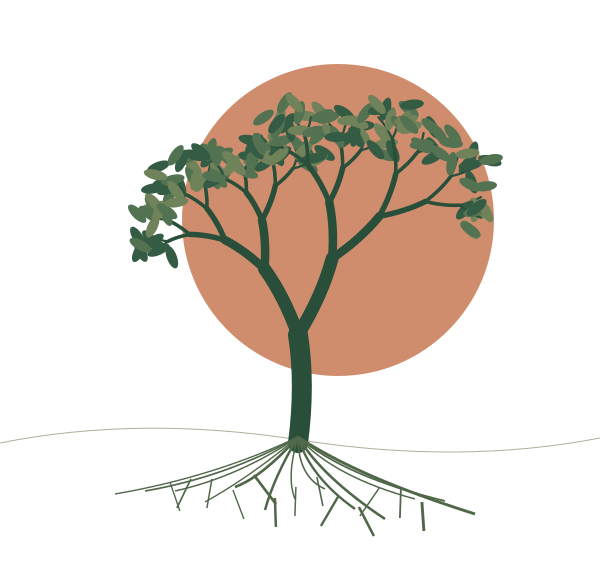
The image of the tree expresses that growth. One part is visible and opens out to the world; another develops within. Learning has those two dimensions too: discovering something new and working through, within ourselves, what that encounter means.
Understanding the world also requires examining how we think, what we believe and how we act. Growing within means cultivating that judgement: integrating what we learn, recognising our limits and approaching our relationships with others and with reality more consciously.
From the path of consilience to Árbol Interior
The project’s initial idea went by the name The Path of Consilience. That word captured an intuition that remains with us: different fields of knowledge can meet, shed light on one another and help us understand problems that a single perspective leaves open.
At Árbol Interior, consilience is an invitation to seek reasoned connections between fields of knowledge. Philosophy, the sciences, art and spirituality are all part of human experience, although they work with different questions, methods and criteria. Bringing them into dialogue requires attention both to where they meet and to how they differ.
The name Árbol Interior gave that intuition a more familiar image. Its branches evoke the different directions of our inquiry; its sap represents the wisdom that nourishes inner growth. An idea understood, an experience examined or a reading that makes us think again can contribute to that development.
Here, wisdom is understood as an aspiration: learning to connect what we know with how we judge, act and live together. That horizon gives the project its meaning and keeps the inquiry open.
Connecting knowledge with rigor
Philosophy occupies a central place because it allows us to review the concepts we use, examine our arguments and recognise the assumptions behind our thinking. Through it, we can approach scientific, cultural, ethical and spiritual questions without erasing what makes them distinct.
When considering a scientific explanation, its evidence, methods and limits matter. When interpreting an artwork, we attend to its context and the arguments supporting a reading. When exploring spirituality, we approach traditions, experiences and searches for meaning, distinguishing them from claims that require empirical verification.
That distinction makes a more fruitful dialogue possible. A metaphor can help us understand an experience, but its expressive power does not make it scientific evidence. A philosophical interpretation can open a discussion without settling it conclusively. Recognising these differences is part of learning to think carefully.
The aim is to offer a space open to readers with different convictions. Clear explanations, context for ideas and the responsible use of sources are part of that work.
From the channel to a shared project
Árbol Interior’s video channel is one expression of this inquiry. Words, images and storytelling make ideas that may seem remote more approachable and connect them with our experience.
The website extends that journey. It brings the video work together and creates space to read more closely, explore a work, follow a reading path and revisit an argument. Each format has its own pace: a video can introduce a concept; an essay can develop a position; a guided reading can accompany our encounter with a thinker.
The project’s six areas respond to these different ways of learning. They share a philosophical orientation and offer entry points through different interests, from an initial curiosity to more demanding reading.
Philosophy in video
The selected series and videos offer an audiovisual introduction to philosophical concepts, thinkers and problems. Video is at the centre of this section, accompanied by an original introduction and references for further exploration.
Organising content into series makes it possible to recognise relationships and follow a path. Someone arriving through a particular topic can place it within a wider conversation and decide how deeply they want to explore it.
Essays and articles
This is the written part of the project: a space to develop ideas, explain debates and examine arguments at the length they need. The texts may address a thinker’s ideas, a contemporary question or the difficulties of beginning to study philosophy.
Writing allows us to clarify a distinction, compare positions and build a reflection step by step. The guiding principle is to keep the writing clear and accessible while preserving the complexity that makes the topic interesting.
Reading paths
Approaching philosophy can feel overwhelming without guidance and context. The reading paths offer carefully considered journeys through books and thinkers, explain why to begin with particular works and support your understanding of them.
Each path can place the author in their time, introduce the main topics, clarify important passages and flag interpretations that need qualification. The aim is to make the original texts more approachable and provide tools to read them more independently, respecting different levels of experience.
Art and philosophy
An artwork brings together ways of seeing, ideas and experiences of its time. This section invites a close look: learning about its creator, understanding its context, attending to its composition and exploring its possible philosophical meanings.
Interpretation begins with the work and what we can know about it. A painting or sculpture can thus become a meeting place for history, sensibility and thought, with room to acknowledge what remains open to debate.
Philosophy and film
Film gives narrative form to questions about identity, freedom, reality, living together and the meaning of our decisions. Following its characters lets us see how those questions become concrete conflicts.
This section combines the context of films, elements of their stories and philosophical analysis. The narrative helps make the reflection understandable, while supporting images draw attention to relevant details of the work. When an analysis needs to reveal plot developments or the ending, the reader should know before continuing.
AI and philosophy
Artificial intelligence raises problems that are already part of our lives: how we learn, how we work, which decisions we delegate and which responsibilities remain ours. This section approaches those changes through articles, news in context, research and philosophical debates.
A central interest of the project is exploring how to use AI to extend our abilities and support independent thought. Understanding its possibilities and limitations helps us use it judiciously, verify what it offers and retain responsibility for our decisions.
A journey that can grow with you
Árbol Interior brings these areas together because learning can begin in very different places. One person may arrive through a film and discover a philosophical problem; another may start with a concept and later find a book that allows them to explore it more deeply.
The proposal is to accompany these paths with educational explanations and scholarly care for the ideas. Providing context, clarifying terms and distinguishing facts, interpretations and proposals allows readers to move forward without expecting them to know everything in advance.
The project can grow in content and voices while retaining that direction: connecting fields of knowledge, cultivating independent judgement and opening paths to understanding. The tree also expresses that possibility. Its branches spread as what we learn finds a place in our inner lives.
Authorship and the use of artificial intelligence
Árbol Interior’s content is produced through different processes. In some cases, we use artificial intelligence to support research or text preparation; other content is produced without it. In every case, we define the approach and take responsibility for review and editorial decisions