 Árbol InteriorThe project Español
The Truman Show and the right to a life of one’s own
You can read this analysis without any prior knowledge of philosophy or having seen the film, bearing in mind the spoiler warning below.
Philosophy and film series · First installment
Spoiler warning: this article follows the story of The Truman Show (1998), including its ending. It is also intended for readers who have not seen the film.
In this article
A life decided by others
Truman Burbank has a job, a home, and people who greet him by name. His life seems ordinary, even comfortable. We soon discover something he does not know: his town is a gigantic television studio, and his private life is broadcast as entertainment. The world that allows him to lead a recognizable life also prevents him from deciding what kind of life he wants to lead.
Directed by Peter Weir, written by Andrew Niccol, and starring Jim Carrey, the 1998 film blends comedy and drama around that deception. Ed Harris plays Christof, the person in charge of the show. It is worth keeping this distinction between the story’s two levels: Weir directs the film we watch; Christof directs the show within it. Official Paramount film page.
Perhaps the most fruitful philosophical question is what Truman needs in order to consider his life his own. Knowing the truth seems essential. He also needs to be able to leave and to have relationships that do not depend on a contract he has never seen. On this reading, reality, freedom, and privacy are part of the same problem: other people control the conditions under which Truman knows, chooses, and relates to others.
Everyday life in Seahaven
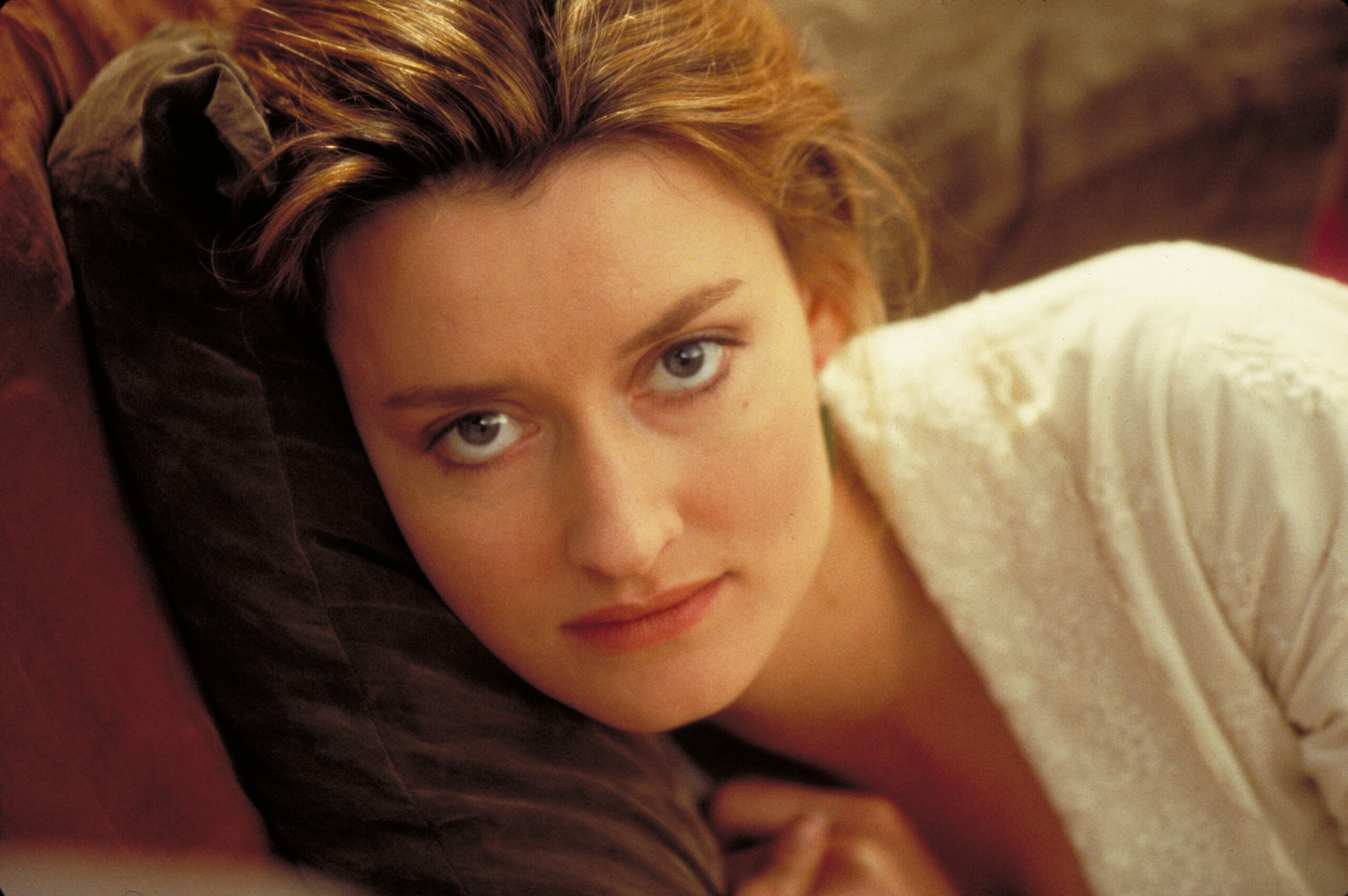
Truman works in insurance and lives with Meryl, his wife, in the bright coastal town of Seahaven. His friend Marlon seems to offer the trust of someone who has known him for years. For Truman, these relationships are part of his life story. For the show’s production team, they are also roles played by actors, while hidden cameras have recorded his life since birth.
There are, however, desires that do not quite fit this routine. Truman wants to travel to Fiji and still thinks about Sylvia, a young woman he met under the name Lauren. She tried to tell him that he was being deceived. She was taken away from him, and he was led to believe she would be moving to Fiji. Outside the studio, Sylvia continues to oppose the show. Her importance in the story comes both from their emotional bond and from having opened up a possibility that Truman’s surroundings try to close off.
The sea carries a different weight in his memories. As a child, he believed he had lost his father during a boat trip. That death was staged, but his fear of water is real. The island thus becomes a boundary that is difficult to cross without needing a visible fence. Truman’s world uses his own history to keep him there.
Learning to doubt with good reason
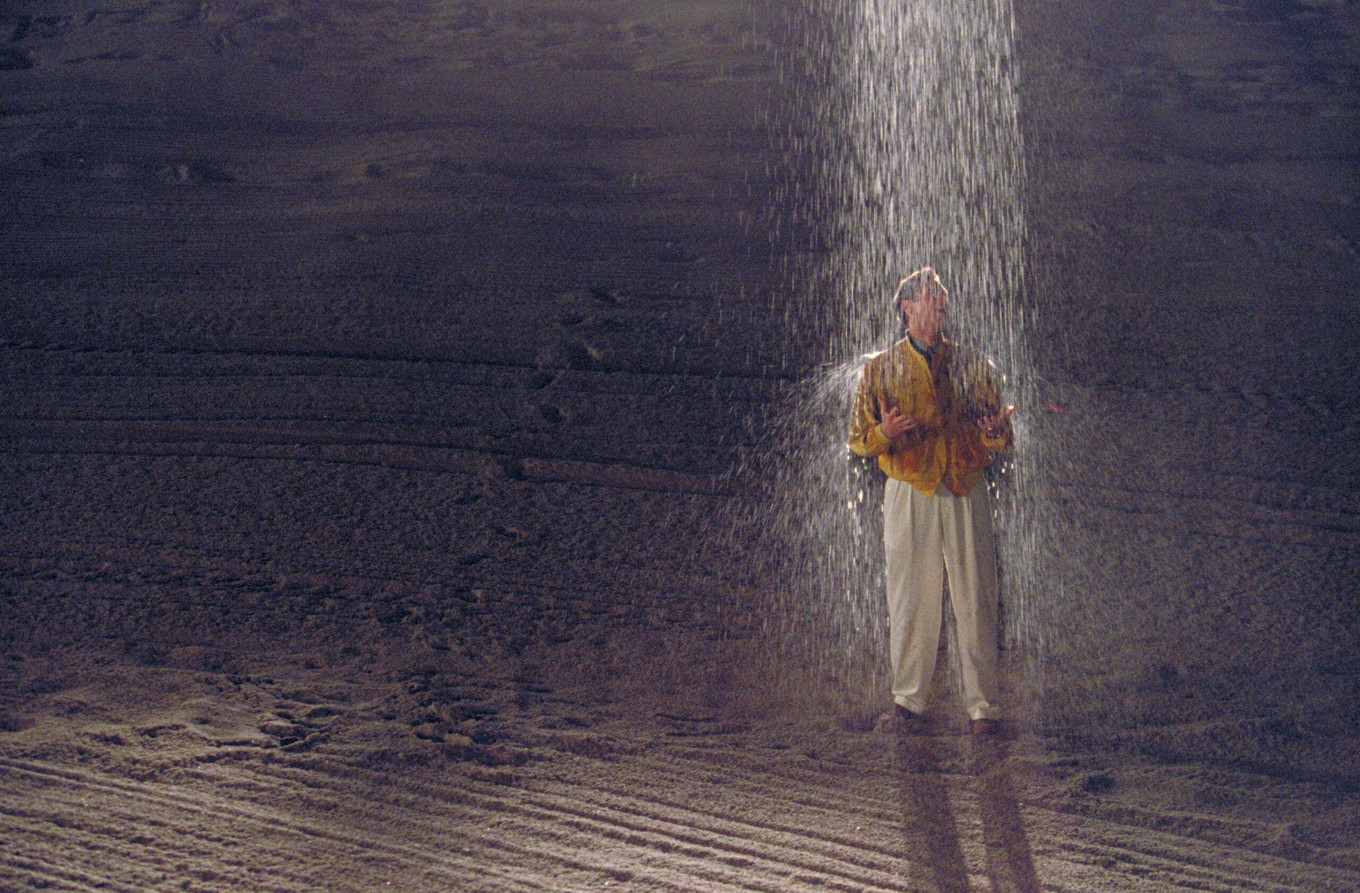
At first, Truman accepts his surroundings because they are all he knows. That trust is understandable. Nobody verifies every conversation, every news story, and every memory from scratch. We depend on other people to know the world; that dependence becomes dangerous when those who should help us understand it work together to deceive us.
A spotlight falling from the sky and a radio broadcast describing his movements introduce contradictions. Truman starts changing his routes and observing how his surroundings respond. There is something particularly valuable about his investigation: suspicion finds support in clues and checks. The film does not require us to conclude that distrusting everything is a superior form of intelligence. It lets us ask when we have reasons to reconsider a belief.
Other episodes deepen that distrust. Truman recognizes the man he believed was his father in the street, but the man is taken away before he can get answers. He also discovers that some people repeat their routes. Seahaven’s normality begins to look like a routine prepared for him. When he departs from what is expected, the production has to adjust in a hurry.
John McGuire suggests reading Christof as a narrative counterpart of the evil demon imagined by Descartes: someone capable of sustaining a deception that undermines our beliefs about the world. The analogy highlights the fragility of certainty based on experiences organized by someone else. McGuire, “The Truman Show”, Philosophy Now, 2001.
The scope of this comparison needs to be made clear. The Cartesian thought experiment raises radical doubt; Truman investigates a specific fabrication that leaves traces. Christof needs actors and equipment that can fail. The story offers reasons to reconsider certain beliefs without proving that all knowledge is impossible or that an unsupported suspicion is true.
The comparison with Plato’s cave helps frame this question. In Book VII of Republic, prisoners take the shadows they have seen since childhood for reality. Leaving requires a difficult transformation in how they see. The story connects this education with knowledge of the good and with the responsibility of the person who returns to the community. Plato, Republic, VII, especially 514a–521b.
Truman, too, must leave behind a framework that seemed unquestionable. The resemblance has limits: leaving Seahaven is not equivalent to attaining the philosophical knowledge Plato describes, nor does the film prove his theory of Forms. The comparison allows us to think about the effort of revisiting what we have learned without turning one story into an exact illustration of the other.

Moreover, Seahaven’s artificiality does not make all of Truman’s experiences unreal. His affections, fear, and pain have consequences in his life. The deception lies in hiding how situations are produced and what those involved in them are seeking. This distinction matters: an experience can be emotionally authentic and be organized in a profoundly unjust way.
Choosing within a prearranged world
Truman can make many small decisions. The problem arises when a choice threatens the show’s continuation. Then his surroundings stop seeming open. His attempts to travel meet obstacles, and his fear of water makes leaving the island difficult.
The travel agency offers no immediate way out, and the bus he tries to leave on will not start. When he decides to drive away with Meryl, he encounters barriers culminating in a supposed emergency at a power plant. At home, the tension breaks through the appearance of their marriage. Marlon intervenes, and the production team arranges the reunion with his father. The show tries to turn a crisis of trust into a scene of reconciliation.
Here it is useful to distinguish freedom of action from personal autonomy. We can be permitted to choose between certain options while also having manipulated information about them. Theories of autonomy examine precisely our capacity to direct our lives for reasons we can recognize and reconsider as our own, rather than remaining subject to influences that distort that deliberation. They do not require us to grow up without social influences: that would be impossible. John Christman, “Autonomy in Moral and Political Philosophy”.
Truman’s situation allows us to apply that distinction. Those around him intervene both in what he can do and in what he considers possible or desirable. There is little point in saying he could leave if the information, relationships, and obstacles are arranged to discourage him. The most effective control can operate before the visible moment of choosing.
Christof presents Seahaven as a safe place. His argument deserves to be taken seriously so that it can be challenged: uncertainty and suffering do exist outside. But that concern does not give him authority to take possession of Truman’s life. Moreover, his role as protector is compromised by his interest in keeping the show going.
Kant’s ethics offers another tool. His humanity formulation requires treating people as ends and never merely as means. The qualification “merely” matters: working with others often involves serving their projects, but it must leave room to recognize their own ends. In the show, Truman’s aspirations are subordinated to a project he could not knowingly accept. This application does not simply equate Kantian moral autonomy with any individual preference. Kant, Groundwork of the Metaphysics of Morals, second section, 4:429.
Intimacy turned into entertainment
The harm of surveillance does not depend on Truman having something shameful to hide. A conversation, an affectionate gesture, or a moment of sadness changes meaning when it is delivered to an unknown audience. Truman has been deprived of the ability to decide to whom he reveals himself and under what conditions.
The philosopher Helen Nissenbaum proposes understanding privacy through contextual integrity: what matters is that the flow of information respects norms appropriate to its context. Separating secret from public data is not enough. The people involved and the conditions of transmission matter too. Nissenbaum, “Privacy as Contextual Integrity”, 2004.
Applied to the story, speaking with someone you believe to be a friend does not authorize turning that conversation into a television product. The harm affects the trust that makes speaking to someone possible. Even if the audience feels affection for Truman, that affection does not replace his consent or restore his control over his exposure.
Surveillance also brings to mind the panopticon analyzed by Michel Foucault in Discipline and Punish. In this model, developed from Jeremy Bentham’s architectural design, someone who may be watched without knowing exactly when comes to monitor their own behavior. The possibility of inspection helps produce discipline. Gary Gutting and Johanna Oksala, “Michel Foucault,” section on the history of the prison.
The difference with Truman is decisive: at first, he does not know he is being watched. He does not perform for a camera he recognizes. The production team uses what it sees to intervene in his surroundings without revealing itself. There is a profound inequality between observer and observed, but the mechanism is not identical to that of the panopticon. Recognizing this difference allows a better analysis of both forms of control.
The way the story is told matters too. Marta Torregrosa and Efrén Cuevas Álvarez distinguish its levels of information: Truman, the actors, the crew, the television audience, and those of us watching the film. This structure makes the fabrication of the spectacle visible while involving us emotionally. It is a metafictional strategy: the narrative reveals how another narrative is constructed within it. Torregrosa and Cuevas Álvarez, Área Abierta, 2010, pp. 3–8.
We can want Truman to break free while enjoying the spectacle of his confinement. That discomfort does not automatically make every act of watching abusive. It does raise a question about our responsibility: what conditions are we willing to ignore to keep watching? McGuire takes his criticism as far as recommending that we give up television to protect autonomy. We can heed his warning without adopting that broad conclusion: examining who decides what we see and what their interests are already changes our relationship with images. McGuire.
Those who keep the show running
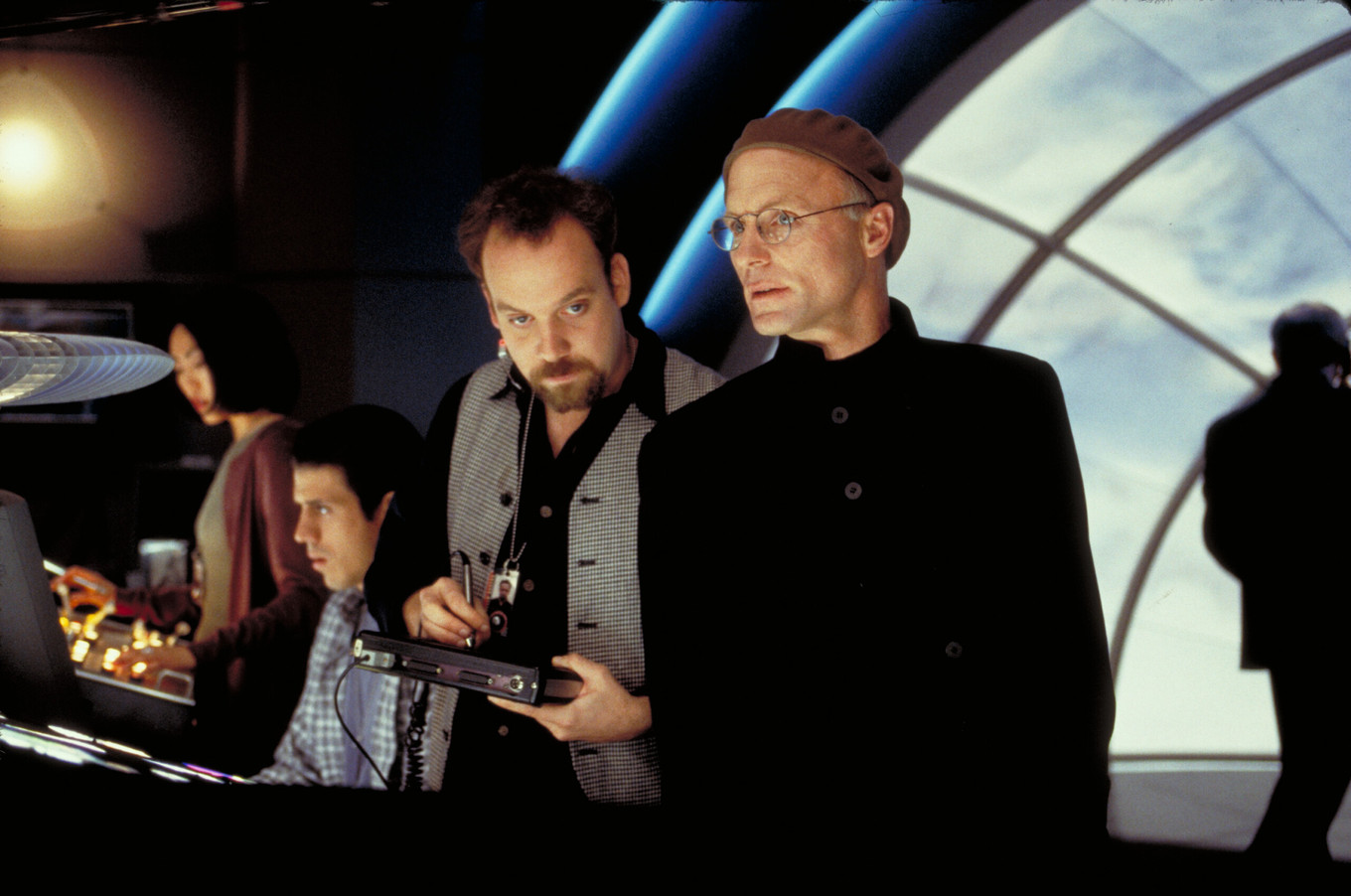
Truman’s individual search takes place within a system that derives value from keeping him there. Christof decides how to intervene, but he needs a production team to maintain the set, actors to sustain the relationships, and an audience that keeps watching. Advertising even enters domestic conversation: when Meryl presents products, what Truman experiences as a relationship with his partner also becomes a shop window. This reading of the film connects the deception with its economic purpose: his life supplies events, emotions, and sales opportunities without his having agreed to that use.
The division of tasks does not eliminate responsibility, though it does not make every position equivalent either. Someone who arranges a storm has a different kind of power from someone watching the broadcast. McGuire emphasizes precisely the audience’s tolerance of violations of Truman’s privacy and autonomy. From that warning, we can ask how affection for a character can coexist with acceptance of the conditions that harm him. Someone’s dignity requires recognizing that they may have ends that interrupt other people’s entertainment. McGuire, “The Truman Show”.
The comparison with today’s reality shows must preserve a fundamental distinction. Truman does not know he is participating and cannot give informed consent; someone who voluntarily joins a show may know about the cameras and accept certain conditions of exposure. That distinction prevents us from equating every reality show with his confinement. At the same time, consenting to participate does not settle in advance every decision about the treatment of intimacy, editing, or risks to the person. What was explained, what was accepted, and how their participation is subsequently represented all matter.
A concrete example of these distinctions appears in the code of Ofcom, the British regulator. Its section on fairness covers information about the program, the expected contribution, and foreseeable risks; it also addresses fair representation in editing and care for the welfare of participants exposed to significant harm. This is a reference within its regulatory jurisdiction, not a universal rule for every production. It does, however, show why consent, editing, and care deserve separate examination. Ofcom, section 7, especially 7.3, 7.6, and 7.15.
Editing can organize a narrative without every image being false. Selecting one moment and leaving another out changes what viewers can understand about a person. In Truman’s fictional world, even a continuous broadcast depends on camera choices and interventions in what happens.
As viewers, we can pay attention to that mediation without accusing every program of deception: distinguish what we see from what we know, avoid turning a fragment into a judgment on an entire life, and refuse to treat humiliation as an inevitable price of entertainment. These are responsibilities of viewing, distinct from the obligations of those who produce and control the broadcast.
Leaving without guarantees
Truman eventually conceals his movements and sets out to sea. The production team searches for him, and when Christof finds him at sea, he orders a storm to stop him. The violence of this attempt makes his role as protector difficult to sustain: he endangers the very person whose safety he invokes. Truman survives and keeps going until his boat strikes a wall painted to look like the sky. He has reached the physical boundary of the set.
Torregrosa and Cuevas Álvarez emphasize that this collision sets a limit to the simulacrum, understood here as a representation that comes to pass for the reality it claims to represent. In their reading, the film enters into dialogue with Jean Baudrillard, the French thinker who studied images and simulation, but ultimately recovers a distinction between representation and reality that the show had erased for Truman. The set can no longer pass itself off as the entire world. Torregrosa and Cuevas Álvarez, pp. 11–13.
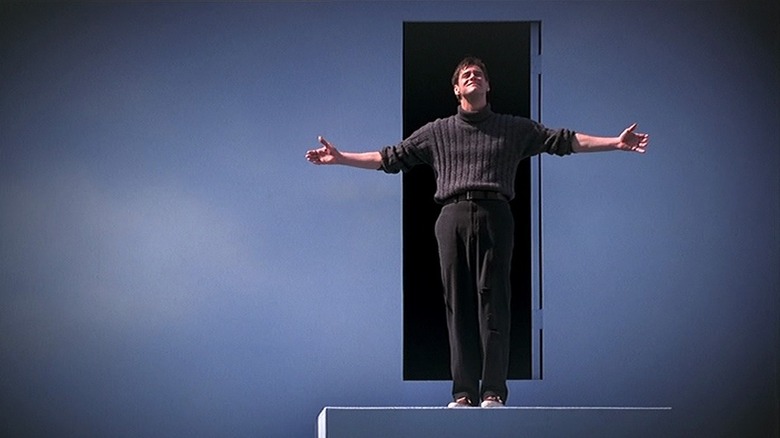
A staircase leads to a door. Christof then speaks to him and acknowledges the nature of the world in which he has lived. He tries to persuade him to stay, arguing that the outside is not free of deception either. Truman listens, says goodbye, and steps through the exit.
He is not given a complete description of the life awaiting him. His decision allows a reading both more modest and more demanding than a promise of happiness: he leaves an order in which others reserve the right to decide for him. The film leaves his new life offscreen. It allows us to accompany his decision, but not to see how things go for him afterward.
The door does not erase the harm or guarantee that the outside is free of manipulation. It opens the possibility of seeking relationships and projects that he can understand, discuss, and reject. That possibility is enough to make the exit matter.
The Truman Show thus leaves us with a question that goes beyond its hidden cameras: what information, what opportunities to disagree, and what spaces of privacy does a person need to direct their own life? The film allows us to try out answers. None requires us to live without relationships or influences. They require those relationships not to become a pretext for replacing our voice.
References and further reading
The philosophical connections in this article are proposed interpretations. They are not presented as confirmed intentions of Peter Weir or Andrew Niccol.
- Main work: The Truman Show (1998), directed by Peter Weir, screenplay by Andrew Niccol. Studio film page.
- Plato: Republic, Book VII, 514a–521b. Full text of the book in Benjamin Jowett’s English translation, MIT Internet Classics Archive. Stephanus numbering makes it possible to locate the passage in other editions.
- Immanuel Kant: Groundwork of the Metaphysics of Morals (1785), second section, especially 4:429 and the section on autonomy. English translation by Thomas Kingsmill Abbott, Project Gutenberg. The reference 4:429 identifies the volume and page of the Academy edition, not the webpage.
- John Christman: “Autonomy in Moral and Political Philosophy”, Stanford Encyclopedia of Philosophy. Support for distinguishing personal autonomy, moral autonomy, and freedom.
- Michel Foucault: Discipline and Punish (1975), Part Three, “Panopticism.” For an academic introduction available online: Gary Gutting and Johanna Oksala, “Michel Foucault”, Stanford Encyclopedia of Philosophy.
- Helen Nissenbaum: “Privacy as Contextual Integrity”, Washington Law Review, 79 (2004), pp. 119–158. Article hosted on the author’s academic website.
- John McGuire: “The Truman Show”, Philosophy Now, no. 32, June–July 2001.
- Marta Torregrosa and Efrén Cuevas Álvarez: “El show de Truman. Estrategias metaficcionales y quiebras del simulacro” [in Spanish], Área Abierta, no. 25, March 2010, pp. 1–15. Full PDF in the UCM journal (in Spanish).
- Ofcom: Section 7 of the Broadcasting Code: Fairness. A British regulatory reference on participant information, editing, and welfare; used within that territorial scope, without assessing specific programs.
- Additional creative context: Lou Thomas, “How we made The Truman Show – 20th anniversary”, interview with Andrew Niccol, BFI, May 31, 2018. The screenwriter’s testimony, not used as authorization for the interpretations above.