 Árbol InteriorThe project Español
What Can We Know About Reality?
This reading offers a guided exploration in greater depth; you can begin with the example in “What happens when the tree falls” before working through the scientific and philosophical explanations.
Árbol Interior · Essays and Articles
Perception, Berkeley, Kant, and the limits of knowledge
In this essay
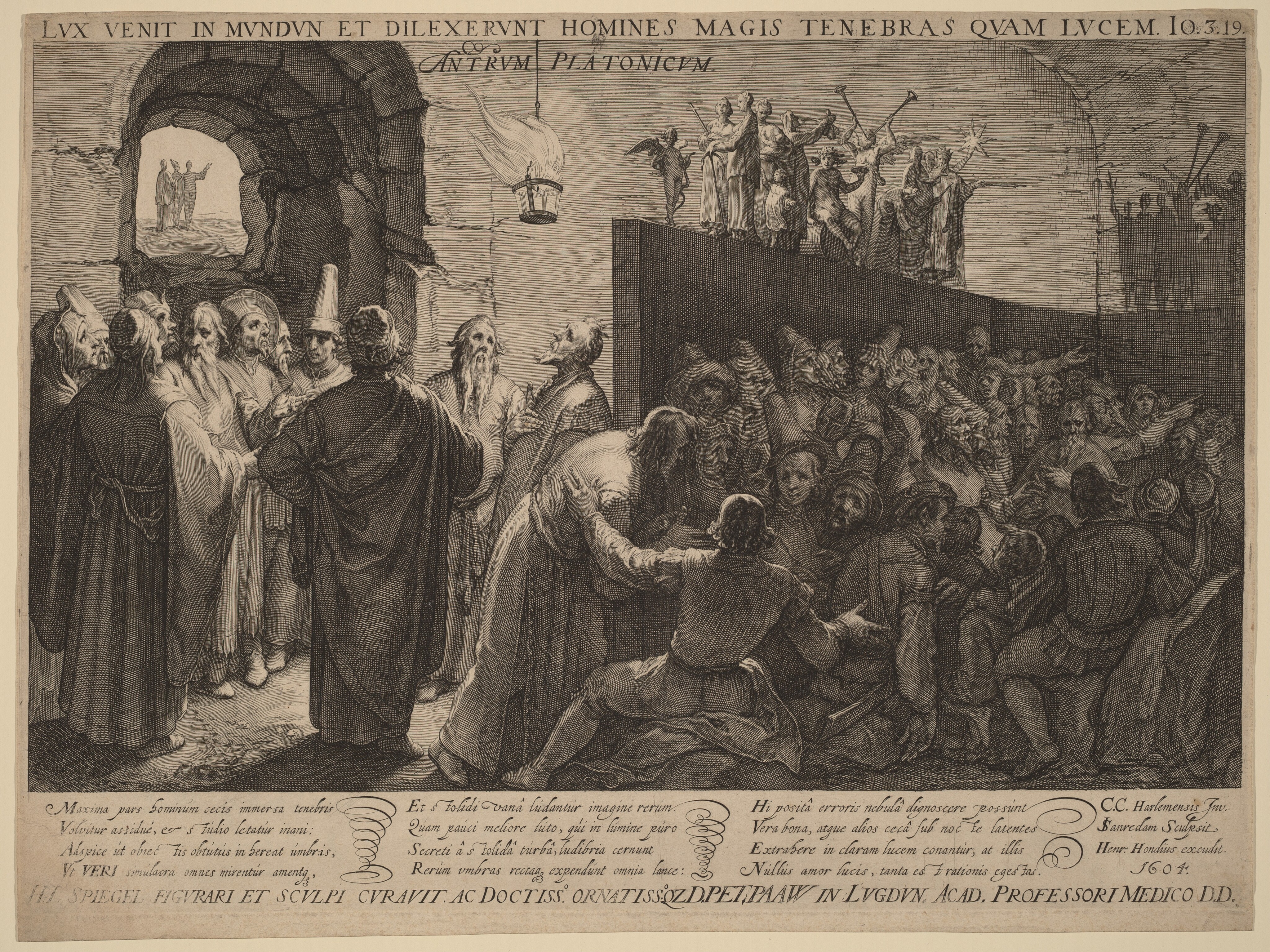
A tree falls in a forest where no one hears it. Has it made a sound? The question seems to demand an immediate answer, but it contains several different questions. Has a physical event occurred? Have waves traveled through the air? Has anyone had an auditory experience? What reasons do we have for claiming that something happens when no one perceives it?
The difference between these questions matters. We can understand some of the processes that make perception possible with considerable precision and still debate the relationship between our experience and the world. Describing how an eye works does not automatically resolve the philosophical problem of what it means to see something. Nor does recognizing the limits of the senses force us to conclude that everything is an illusion.
This essay will defend a limited but fruitful answer: we can gain knowledge of reality without having a complete or infallible perspective on it. To understand the scope of that answer, it helps to distinguish the process of perceiving, the reasons that justify our beliefs, and philosophical theories about what exists. Berkeley and Kant help us formulate these distinctions, although their views are neither equivalent nor results of neuroscience.
Experience begins in a relationship
When we look at a tree, lighting, the characteristics of its surfaces, and our visual system all play a part. Light reaching the retina activates molecular processes in the photoreceptors, cones and rods, and changes their electrical activity. Transduction is the conversion of light into signals in the nervous system: it allows a light stimulus to take part in neural processing. Trevor D. Lamb’s review describes these mechanisms in detail and explains how they differ between the two cell types. Lamb, 2022.
It is worth pausing over colors. The appearance of a leaf does not depend solely on an isolated wavelength. The composition of the light, the surface’s reflectance (the proportion of light it reflects), the receptors’ sensitivity, and the visual context all play a part. Moreover, our perception can retain some stability when the lighting changes: a surface continues to look approximately the same color under different lighting conditions. This capacity, known as color constancy, is relative and subject to error. Morimoto, 2024.
From this we can learn that color appearance depends on a complex relationship. Deciding whether colors are physical properties, dispositions to produce experiences, or relational properties raises a further philosophical question. The expression “green exists only in your brain” gives a categorical answer before clarifying what we mean by color and existence.
What we expect can influence how we perceive what is in front of us; this does not mean we can see anything we choose at will.
Expectations also have an influence. In an experiment using functional magnetic resonance imaging, Peter Kok and colleagues found that expectation could improve the information about a stimulus recoverable from activity patterns in the primary visual cortex, even while reducing the overall amplitude of the response.
The finding shows a modulation of visual processing under specific conditions. Kok, Jehee, and de Lange, 2012.
Predictive processing models attempt to explain aspects of perception through the relationship between predictions and sensory signals. They remain a field of research. A critical review found modest empirical support for predictive coding and noted that some results also allow alternative explanations. Describing all perception as a “controlled hallucination” may be suggestive, but, taken literally, it goes beyond what these studies have demonstrated. Hodson, Mehta, and Smith, 2024.
The involvement of the nervous system helps us understand why perceiving requires activity in the organism. Another question remains open: what relationship constitutes that experience, and why does it have a conscious character? A description of the mechanisms and a philosophical interpretation of their meaning serve different purposes.
What happens when the tree falls


Let us return to the forest. In an ordinary physical description, a falling tree can generate vibrations and pressure waves that travel through the air. Producing them does not require an ear. In this sense, sound is a physical phenomenon and hearing is its perception. This is, for example, the distinction introduced in the OpenStax university textbook. University Physics, section 17.1.
If we use “sound” to mean the experience of hearing, the answer changes: without any listener, human or animal, there is no such auditory experience. That is why the phrase “there are vibrations, but no sound” may be reasonable under one definition and mistaken under another. Much of the confusion disappears when we make the question precise.
The philosophy of hearing, moreover, has no single answer to what sounds are. Some theories understand them as experiences or sensible qualities, while others locate them in public events in the world. The tree question does not let us declare one of these theories the winner through a simple play on words. “Auditory Perception,” Stanford Encyclopedia of Philosophy.
Now imagine that we leave a recording device and return the next day. The recording can provide evidence of what happened while we were away. It does not reproduce a human experience that no one had: it preserves an effect of the event that we can later examine. This example lets us separate three things we often confuse: an event, the experience of that event, and the available evidence about it.
Mediation does not determine what we perceive


One inference is especially tempting: if seeing a tree requires light, a retina, and a brain, then we never see the tree, only an inner image. The problem is that the conclusion introduces a new premise. That a process makes it possible to perceive something does not mean the process is the object we perceive.
Think of an ordinary act of reading. To understand a sentence, we need to recognize signs and perform many cognitive operations. It does not follow that we understand only those operations. Similarly, identifying the mechanisms of vision does not by itself show that what is seen is a mental entity situated between us and things. The analogy does not prove a theory of perception, but it helps locate the leap in the argument.
In one of its philosophical senses, direct realism holds that we perceive objects in the world without first having to perceive an intermediary mental object. That thesis is compatible with perception having physical and physiological conditions. There are also representational theories, which appeal to how experience presents the world, and sense-data theories, which posit immediate objects of experience, such as colors or shapes. These are different proposals, and none is established by this description; their relationships with direct realism depend on the meaning of “direct.” To assess their differences, we must clarify what they mean by representation, object, and direct access. The existence of neurons alone does not settle the debate. “Epistemological Problems of Perception,” sections 2.1 and 2.3.
Illusions pose a genuine difficulty. Something can appear different from how it is, and a hallucination can present itself as a perception without a corresponding external object. Philosophical theories of perception disagree about how to explain these possibilities and their relationship to cases in which we perceive correctly. “The Problem of Perception,” Stanford Encyclopedia of Philosophy.
But acknowledging that we are sometimes mistaken and maintaining that we are always cut off from reality are claims of different scope. Error calls for investigation: identifying its conditions, comparing observations, and revising judgments. A universal conclusion requires further arguments.
Berkeley and the existence of sensible things
George Berkeley offered one of the most demanding approaches to this problem. In his A Treatise Concerning the Principles of Human Knowledge, published in 1710, he distinguishes perceived ideas from the spirit or subject that perceives. For sensible things, his characteristic formula is esse est percipi: their being consists in being perceived. The active subject is not, in turn, just another sensible idea. Omitting this distinction reduces his philosophy to a slogan that is difficult to understand. Berkeley, Principles, §§ 1–3 and 27.
His starting point is concrete. An apple presents itself through qualities such as color, taste, shape, and texture. Berkeley asks what it means to add to what is perceived a material substance that would exist in complete independence of any mind. He also challenges the idea that our perceptions are copies of external matter: he holds that an idea can resemble only another idea. In doing so, he seeks to challenge the explanation that treats what is perceived as a representation of something radically different and hidden behind it. Principles, §§ 4–9 and 18–20.
Accepting his argument means committing to a strong metaphysical thesis, immaterialism: the denial of a material substance independent of all minds. However, Berkeley insists that he does not intend to eliminate trees, tables, or mountains. He rejects material substance as conceived by certain philosophers while maintaining the reality of sensible things. He also distinguishes sensory experiences from the images we summon at will: the former have an order and an independence from our desires that imagination does not. Principles, §§ 29–35.
Nor does he claim that the world disappears every time I close my eyes. His theory does not make all things depend on my particular mind. Other minds matter, and God occupies a central place in his explanation of the order of experience and the existence of things beyond our individual perception. This theological dimension is part of his system; it cannot be erased without changing it. Principles, §§ 6, 48, and 146–149.
The critical question Berkeley leaves us remains fruitful: what reasons do we have for asserting a reality independent of perception, and how do we conceive of that independence? We can accept the importance of the problem without accepting his answer. The fact that we know through certain capacities does not simply entail that everything that exists depends on those capacities. It is precisely that step that requires examination.
Kant and the conditions of knowledge
Immanuel Kant shifts the question. His Critique of Pure Reason, published in 1781 and revised in 1787, investigates the conditions that make human knowledge possible. Sensibility gives us objects in intuition, understood here as the immediate presentation of an object to sensibility, not as a hunch; the understanding allows us to think them through concepts. For Kant, knowledge requires the collaboration of both faculties. Kant, Critique of Pure Reason, A50–51/B74–75.
His proposal includes a decisive thesis: space and time are forms of our sensibility. We do not first acquire a collection of completely disorganized data and then add space and time at will. Kant holds that these forms are conditions under which objects can appear in our experience. His inquiry is transcendental because it asks about these conditions of possibility. Critique, A22–28/B37–44 and A30–36/B46–53.
Here we encounter the distinction between appearance and thing in itself. An appearance is the object as it can appear under the conditions of our knowledge. The thing in itself is considered independently of those conditions. The distinction does not amount to separating a false image from a true object hidden behind it. For Kant, objects of experience can be known objectively, although that knowledge does not determine what things are like when considered apart from our way of knowing.
This helps explain why he combines transcendental idealism and empirical realism. Defending the limits of knowledge does not lead him simply to deny the existence of external objects. In the second edition of the Critique he includes a “Refutation of Idealism,” intended to show that determining our own existence in time presupposes experience of external objects. The force and interpretation of that argument remain disputed, but its purpose rules out describing Kant simply as a thinker who confines us within the mind. Critique, B274–279.
Scholars also disagree about how to understand the relationship between appearances and things in themselves. Some interpretations emphasize a difference between domains of objects; others, between ways of considering objects. Presenting either reading as beyond dispute would conceal an important controversy. “Kant’s Transcendental Idealism,” Stanford Encyclopedia of Philosophy.
In this context it is crucial to avoid an anachronism: Kant does not propose a theory of how neurons manufacture images. Transcendental conditions are not equivalent to personal habits, acquired expectations, or brain mechanisms. Research into the visual cortex can expand our empirical knowledge, but it does not automatically confirm transcendental idealism. Nor does a more powerful instrument, on its own, turn the thing in itself into an observable object. These are problems formulated at different levels.
Having evidence and knowing something
The initial question can be reformulated: if experience admits error, what distinguishes knowledge from a belief that merely convinces us?
In the sense of knowing that something is the case, knowledge requires truth: if a claim is false, we do not come to know it, however convinced we are. But being right is not enough either. We can form a true belief by chance. Epistemology studies what relationship to reasons, reliable methods, or a subject’s capacities allows us to distinguish such lucky successes from knowledge. There is no complete definition accepted by all positions. “Epistemology,” section 2.3.
Suppose I claim that the tree fell during the night. I may have clues: yesterday it was standing and today it is on the ground. A recording with a reliable time stamp and a weather record would provide additional information. None of this should be confused with the mere feeling of being certain. Reasons can grow stronger, become weaker, or prove misleading. The time stamp might be incorrect; the tree might have been cut down rather than blown over.
The distinction helps us ask more useful questions than “Can I be absolutely certain?” What claim do the data support? What alternatives remain open? What observation would distinguish between them? Knowing that the tree had already fallen by early morning is not the same as knowing why it fell. The same body of evidence can justify one conclusion while being insufficient for another.
A fallibilist conception of knowledge allows us to maintain that knowing does not require reasons that infallibly guarantee truth. That position does not license calling any provisional belief knowledge: it requires explaining what support is sufficient and how to attend to reasons that undermine it. The dispute about that threshold belongs to epistemology; it is not settled by measuring the strength of our conviction. “Certainty,” section 2.2.
From this perspective, recognizing limits has a practical consequence: aligning what we claim with what our reasons allow us to claim. Intellectual caution works better when it specifies an uncertainty than when it turns every question into indiscriminate doubt.
Checks on knowledge
Our individual experience is not the only resource available. We can repeat observations, compare procedures, use instruments, and check results against one another. That does not place us outside all experience: it expands the ways we can check some observations against others and makes it harder for a particular error to go unnoticed.
Think of two thermometers that give different readings. The discrepancy does not imply that temperature is a matter of opinion. It invites us to investigate their calibration, location, and measurement conditions. Similarly, a diversity of perspectives can become a tool for knowledge when we identify what explains their agreements and differences. Objectivity is not achieved simply by counting how many people agree.
There is, however, a further step between having successful theories and claiming that we know the ultimate structure of reality. Scientific realism holds, in its different versions, that our best theories justify beliefs about observable and unobservable aspects of the world. Its critics ask how far predictive success entitles us to go and point to historical changes in theories. This debate prevents us from automatically equating “it works well” with “it is a final and complete description.” “Scientific Realism,” Stanford Encyclopedia of Philosophy.
The existence of that debate does not make all explanations equivalent. A proposal that is open to demanding tests and responds to adverse results offers resources that a claim shielded from any refutation does not. We can compare the quality of reasons even while continuing to debate their metaphysical reach.
Back to the forest
Now we can return to the tree with more precise questions. We can investigate whether it fell, when it happened, and what physical consequences it produced. We can distinguish those consequences from an auditory experience. We can also examine what we mean by existing independently of a mind and what conditions make it possible to know an event.
Berkeley requires us to justify the notion of a material substance independent of perception. Kant requires us to consider the conditions and limits of our knowledge. Scientific research studies perceptual mechanisms and subjects explanations to tests. None of these tasks automatically replaces the others.
The answer defended here does not promise a view of reality from nowhere. It proposes something more limited: we can understand aspects of the world, identify errors, and improve our explanations without having resolved every question about what is real. That our knowledge is human, situated, and revisable does not show that it lacks an object or value.
The question that remains open is demanding and concrete: when we claim to know something, can we explain what we know, what we rely on, and where our reasons run out?
Sources and further reading
Primary philosophical works
- Berkeley, George (1710). A Treatise Concerning the Principles of Human Knowledge. Especially §§ 1–9, 18–20, 27, 29–35, 48, and 146–149. Full English text, Project Gutenberg. The explanations in the Spanish original of this essay are paraphrases, not quotations from any particular Spanish translation.
- Kant, Immanuel (1781/1787). Critique of Pure Reason. English translation by J. M. D. Meiklejohn. Full text, Project Gutenberg. The A and B references follow the conventional pagination of the two original editions. The Transcendental Aesthetic, the introduction to the Transcendental Logic, and the Refutation of Idealism were consulted.
Scientific research and reviews
- Lamb, Trevor D. (2022). “Photoreceptor physiology and evolution: cellular and molecular basis of rod and cone phototransduction.” The Journal of Physiology, 600, 4585–4601. Review article.
- Morimoto, Takuma (2024). “Mechanisms of human color constancy underpinning stable visual perception.” JSAP Review, 240213. Open-access scientific review.
- Kok, Peter; Jehee, Janneke F. M.; and de Lange, Floris P. (2012). “Less is more: expectation sharpens representations in the primary visual cortex.” Neuron, 75(2), 265–270. Experimental research, record and abstract.
- Hodson, Rowan; Mehta, Marishka; and Smith, Ryan (2024). “The empirical status of predictive coding and active inference.” Neuroscience & Biobehavioral Reviews, 157, 105473. Critical review, record and abstract.
- Moebs, William; Ling, Samuel J.; and Sanny, Jeff (2016). University Physics, volume 1, section 17.1. OpenStax, Rice University. University textbook on sound waves and hearing.
Academic guides and background reading
The following entries belong to the Stanford Encyclopedia of Philosophy. The dates indicate the publication or revision of the version consulted.
- O’Callaghan, Casey (2020). “Auditory Perception”. Different theories of sounds.
- Lyons, Jack (2023). “Epistemological Problems of Perception”. Direct access, mediation, and perceptual justification.
- Crane, Tim; and French, Craig (2021). “The Problem of Perception”. Illusion, hallucination, and theories of experience.
- Stang, Nicholas F. (2016). “Kant’s Transcendental Idealism”. Interpretive controversies about appearances and things in themselves.
- Steup, Matthias; and Neta, Ram (2024). “Epistemology”. Knowledge and justification.
- Reed, Baron (2022). “Certainty”. Certainty and fallible knowledge.
- Chakravartty, Anjan (2017). “Scientific Realism”. The scope of scientific theories.