 Árbol InteriorThe project
Plato’s dialogues: Apology, Crito, and Euthyphro
In this reading path
Plato: a brief biography

The author and his time
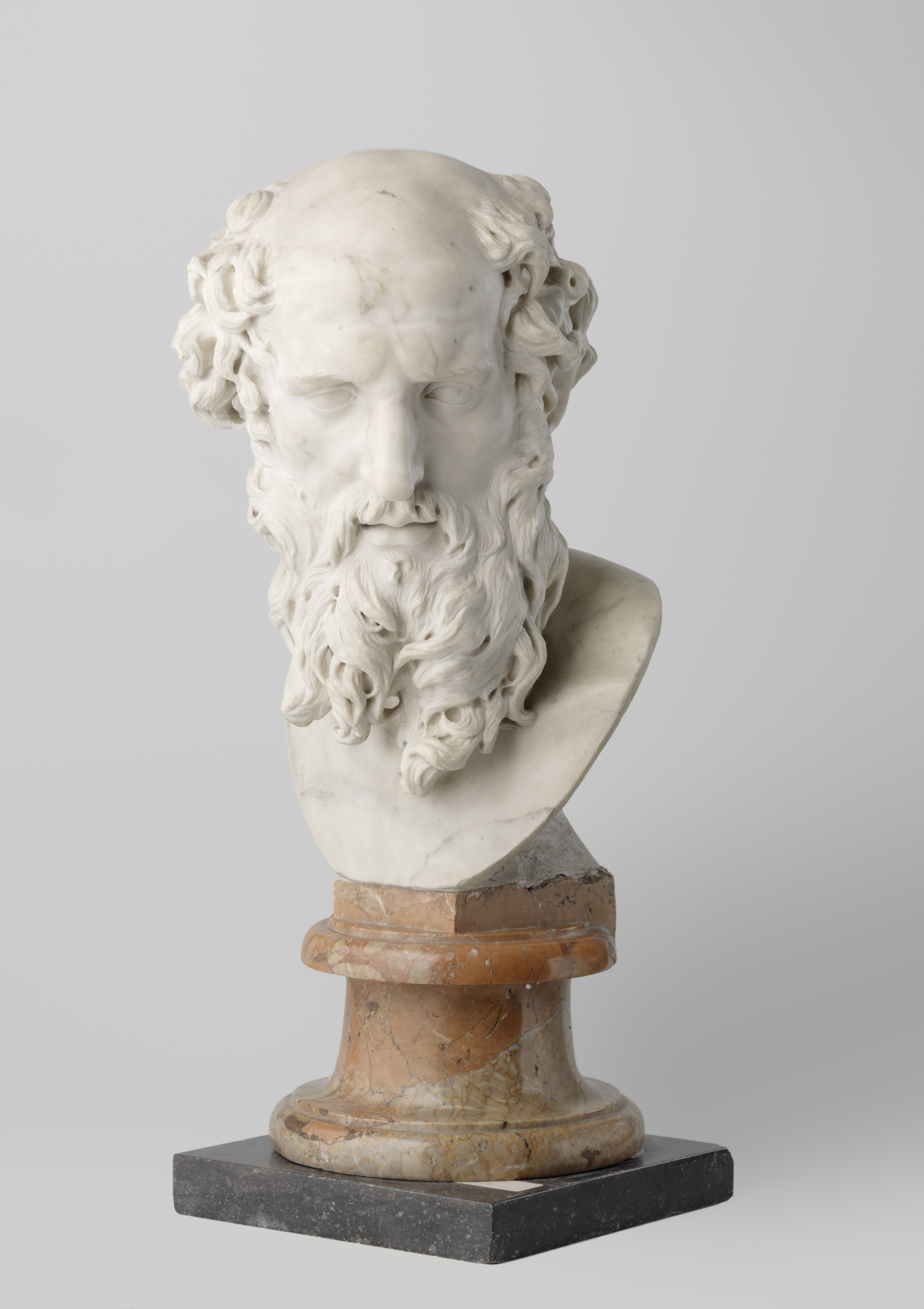
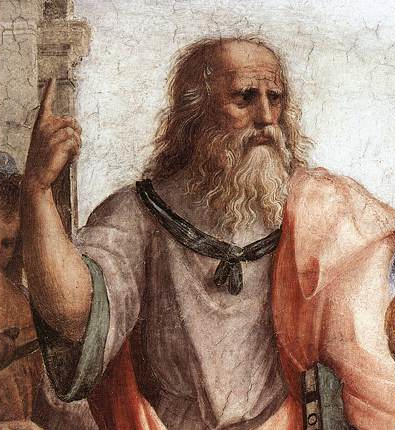
Plato was an Athenian philosopher who lived between the late fifth century and the middle of the fourth century BCE. According to an ancient tradition, his original name was Aristocles, and “Plato” was a nickname associated with his robust build. He belonged to a wealthy and politically influential Athenian family and was a pupil of Socrates, whose figure occupies a central place in his writings. He founded the Academy, a community devoted to study and philosophical discussion where Aristotle was educated. He wrote mainly dialogues, exploring justice, knowledge, education and the best way to live. His characters do more than present answers: they also raise difficulties that invite readers to think for themselves.
This path begins with three works linked to the trial and death of Socrates. The biography gives the reader a point of reference; the meaning of each text emerges by following its conversation and its reasoning.
Sources: Internet Encyclopedia of Philosophy: Plato, biography and Stanford Encyclopedia of Philosophy: Plato. The Academy; Diogenes Laertius, III.4: the Aristocles tradition.
Socrates
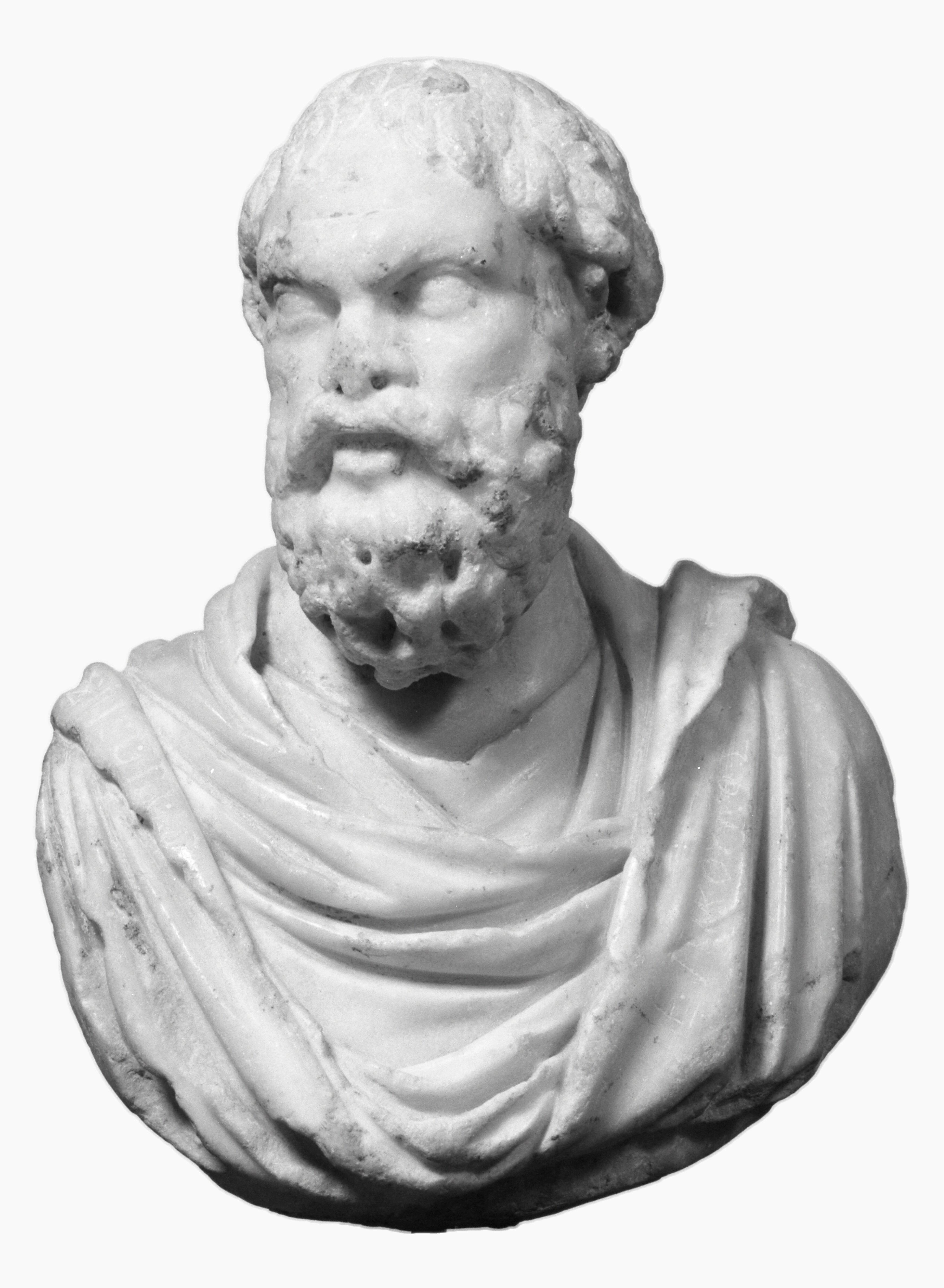
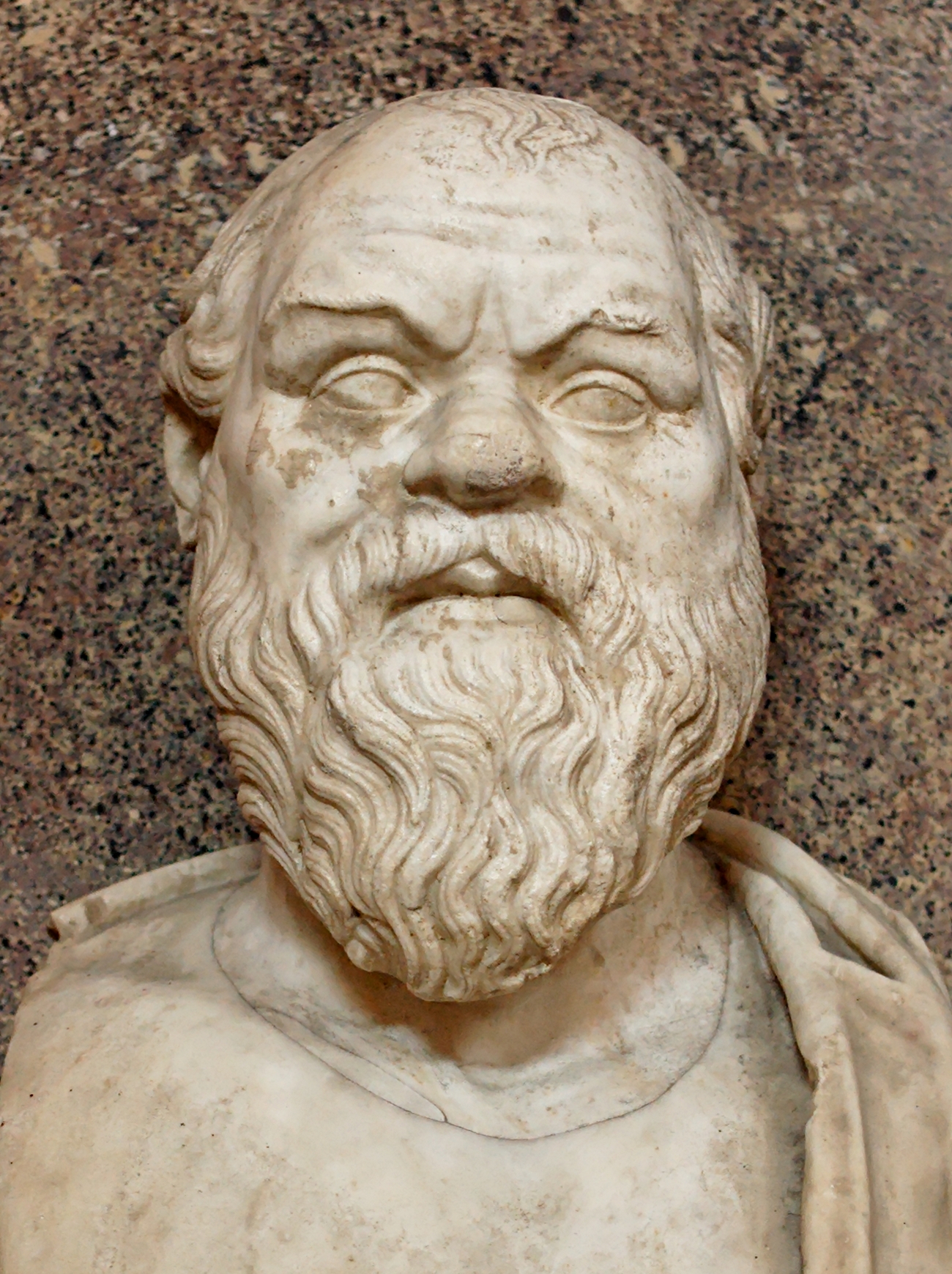
Socrates lived in Athens from 469 to 399 BCE. His philosophical activity centered on conversations with his contemporaries and the examination of their convictions. He left no writings. Aristophanes, Xenophon, and Plato are among the ancient sources that portray him, each with different purposes and perspectives. His conviction and execution in 399 form the background to this first installment. He was not a figure detached from his city: his life unfolded in an Athens marked by wars, political conflicts, and changes of regime.
It is worth distinguishing Socrates as a historical person, Socrates as a character in these works, and Plato as their author. The distinction does not make history irrelevant, but it prevents us from automatically attributing every statement by the character to a definitive doctrine of Plato’s. It also counsels caution in reconstructing a single “Socratic method” always applied in the same way. Stanford Encyclopedia of Philosophy on Socrates.
An introduction to Plato
Plato explores the good life, justice, education and knowledge through dialogues in which Socrates appears as a character. These are philosophical compositions, not verbatim transcripts: the character’s remarks should not automatically be attributed to the author.
Apology, Crito and Euthyphro are usually placed among his early works, although their order of composition is disputed. We bring them together because of their connection with the proceedings against Socrates: Euthyphro takes place before the trial, Apology presents his defence, and Crito shows him in prison, facing the possibility of escape. This path proposes reading Apology → Crito → Euthyphro, with context and commentary to explore the philosophical life, justice and piety, without replacing the reading of the works themselves.
Stanford Encyclopedia of Philosophy: Plato · Plato’s Shorter Ethical Works.
Reading a philosophical conversation
In a dialogue, a statement also depends on who makes it, whom it answers, and what has happened before. Hesitations, irony, and comparisons are part of the thinking that is taking shape. If we isolate a sentence, we may miss a later objection or mistake a provisional proposal for a conclusion.
This does not require finding a secret meaning behind every remark. First, attend to what is happening in the conversation. Nor is there a single interpretive key that works in the same way for every dialogue. The Apology illustrates this diversity: although usually published alongside the dialogues, it consists mainly of speeches in defense, with an exchange with the accuser Meletus. Stanford on Plato’s literary form.
Dramatic and historical context.
References such as 21b or 49b use Stephanus pagination. They allow you to locate a passage across different editions and do not necessarily match the pages of the copy you are reading.

Apology of Socrates
Read or download the full Apology in Spanish (PDF)
Translation: Patricio de Azcárate, 1871.
Before you begin
“Apology” here means a defense. Plato presents Socrates before the Athenian court, answering charges concerning the corruption of the young and his relationship with the city’s gods. Alongside the formal accusation stands a public image built up over many years. This distinction helps explain why Socrates devotes part of his speech to his reputation and his daily activity.
The work brings us closer to his defense, but should not be read as a verbatim transcript of the trial. Primary text at MIT.
Following the reading
At the outset, Socrates distances himself from certain expectations of courtroom speech and asks his listeners to attend to the truth of what he says. He then tries to explain how he has become an uncomfortable presence. The account of the Delphic oracle is central to that explanation: his examination of those who seem wise helps him clarify the meaning of his own wisdom.
As the defense progresses, the trial of a person also becomes a discussion of his way of life. Readers can follow that shift without assuming that all of Socrates’ arguments are equally strong. Admiring his attitude and examining his reasons are compatible responses.
Key passages
The defense and reputation, 17a–20c. The distinction between earlier and current accusers structures the opening. A formal accusation has an identifiable person to whom one can respond; an image spread throughout the city is harder to question. Socrates mentions, among other things, the caricature associated with Aristophanes’ comedy. For the reader, this background explains why the defense does not simply follow the list of charges: it also tries to change the frame through which the audience listens.
His claim to speak without embellishment is itself part of a speech carefully presented by Plato. We do not have to decide that this lack of artifice is literal to understand what he is asserting: the value of a defense depends on its truth, not only on its effectiveness. That claim deserves examination in what follows.
The oracle and the limits of knowledge, 20c–23b. Socrates examines the reputation of those who seem wise. The difficulty arises when someone moves from mastering a craft or activity to believing that they also understand matters for which they cannot offer good reasons. The passage does not praise ignorance. It identifies a gap between what one knows and what one thinks one knows.
The account of the oracle joins a religious experience to an inquiry that does not simply accept the first interpretation of its words. Socrates tests the meaning of the Delphic response through encounters with other people. The popular formula “I only know that I know nothing” may serve as a rough reminder, but it impoverishes the passage if it suggests that Socrates denies all knowledge or suspends all moral judgment. Here the text distinguishes kinds and limits of knowledge.
The exchange with Meletus, 24b–28a. For a moment, the defense takes the form of questions and answers. Socrates tries to expose difficulties in what his accuser claims about the education of the young and his religious beliefs. The examples of those who improve animals reveal a recurring strategy: clarifying a complex matter through a more familiar activity.
The comparison should not be mistaken for an automatic proof. Educating people and training horses may have similarities, but they also have differences. Keep that qualification in mind when assessing the argument. Likewise, finding a contradiction in an accuser does not by itself resolve every doubt about the accused. The scene lets us observe both the force and the limits of a refutation.
Philosophical activity as a commitment, 29b–30b. The defense presents philosophy as an occupation that affects people’s lives and priorities. In this section, Socrates connects that activity to a divine mission. This religious dimension belongs to the text and should not be erased to make it fit a modern image of a wholly secular thinker.
Care of the soul is placed above prestige and wealth. In this context, “soul” is linked to character and the moral quality of a life. There is no need to introduce immediately the accounts of its nature and immortality developed in other works. The argument of this defense has a practical focus first: what matters is what a person becomes through acting.
The image of the gadfly, 30e–31a. Socrates compares the city to a large, noble horse that needs waking, and casts himself as the insect that keeps it alert. The image explains how he wants his relationship with Athens to be understood: being a nuisance can be part of a service. Yet the metaphor does not by itself prove that everything he does is useful or just. It presents the accused’s interpretation of his own activity.
The divine sign and public action, 31c–33a. Socrates describes a sign that dissuades him from certain actions. In this passage, he does not present it as a voice dictating a complete program of conduct. Simply translating it as “conscience” or “intuition” may make it more familiar to a modern reader, but also introduces concepts that do not exactly match what the character says.
The examples of his conduct under the democracy and under the oligarchic rule of the Thirty show the importance he places on not participating in injustice. The contrast is more precise than a simple opposition between the individual and the state: Socrates sets the demand to act justly against pressures from different regimes. This point will matter in Crito.
The proposed penalty, 35e–38b. Once guilt has been established, the work enters another phase. The tone of some of Socrates’ proposals may seem provocative. Before turning this into an anecdote about pride or contempt for the judges, it is important to notice that he is still defending an understanding of his activity incompatible with treating it simply as a crime. The degree of irony and the intention behind each remark are open to debate; the guide need not settle them with a single psychological explanation.
The examined life, 38a. This formulation is best understood within the situation in which Socrates considers the conditions under which he could continue living. Detached from the scene, it can become a slogan much simpler than the argument of which it forms a part.
The final words, 38c–42a. The speech addresses those who condemned Socrates differently from those who would have acquitted him. His reflection on death presents possibilities, including dreamless sleep or the continuation of conversations elsewhere. It is important to retain the conditional nature of these passages. They do not amount to a complete demonstration of the soul’s immortality. The moral firmness of the defense coexists to the end with limits on what is known.
The passages can be checked against the Apology from Harvard’s Center for Hellenic Studies, which includes passage references and some Greek terms. It is an English adaptation of Benjamin Jowett’s translation.
A contrast worth preserving
The acknowledgment of the limits of knowledge coexists with the firmness with which Socrates defends certain commitments. There is no need to eliminate that tension by saying that he doubts everything, or to attribute complete certainty to him on every subject. A reading can distinguish the examination of a claim, adherence to a moral conviction, and the religious justification of an activity. These aspects are related, but not identical.
With this contrast still open, we arrive at Crito, where convictions cease to be merely a matter of public defense.
Crito
Read or download the complete Crito in Spanish (PDF)
Spanish text: Grupo Areté, Universitat de València.

Before you begin
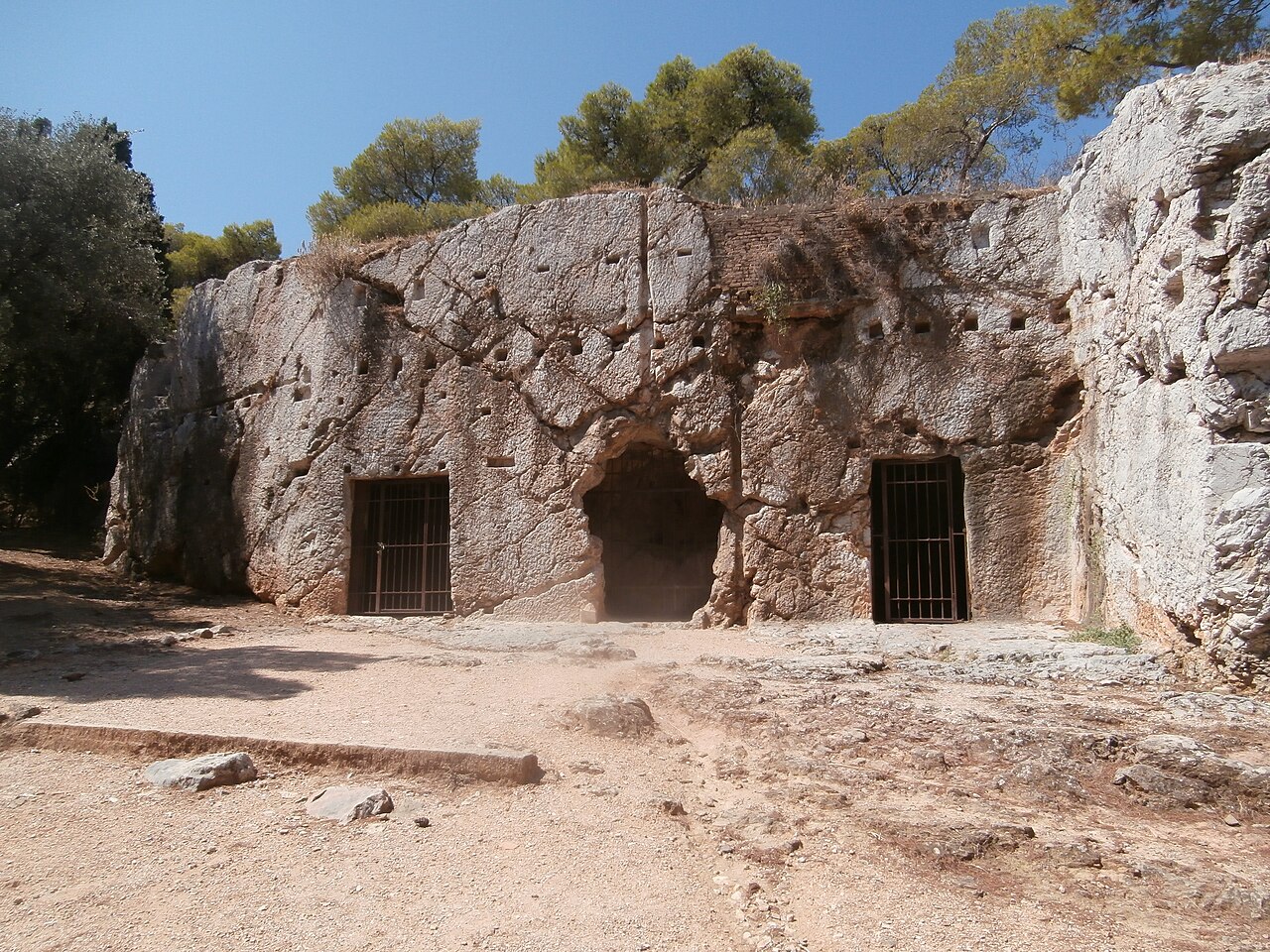
Socrates is in prison after being condemned. His friend Crito offers him the chance to escape. The dialogue grows out of a close relationship and a specific urgency. Friends, children, reputation, and the means available for escape all form part of that situation.
Crito deserves to be read as someone trying to save a person he loves, not as a mere obstacle placed there so that Socrates can expound a doctrine. Primary text at MIT.
Following the reading
The conversation moves from the reasons for escaping to the criteria by which that action should be judged. Socrates insists on examining whether it would be just to do so. What seemed a practical question thus becomes a discussion of the limits of a response to injustice.
The second part introduces a crucial device: Socrates imagines what the Laws of Athens would say if they could question him. This voice brought into the conversation changes the dialogue’s tone and concentrates its arguments about obligations toward the city.
Key passages
The prison scene, 43a–46a. Socrates’ calm contrasts with Crito’s urgency. The return of a sacred ship is connected with the approaching execution; here the religious context affects the timing of the action. The details of dawn, waiting, and friendship give weight to what might otherwise seem an abstract argument about law.
Crito offers reasons of different kinds. He worries about losing his friend, appearing unwilling to help him, and leaving his children fatherless. He also believes the practical obstacles can be overcome. These considerations are not equivalent and should not be dismissed together as mere fear of others’ opinions. The dialogue becomes more interesting when we recognize the human force of the proposal Socrates rejects.
Other people’s opinions, 46b–48b. The dialogue distinguishes the social weight of an opinion from its value in judging correctly. The fact that a majority can harm someone does not prove that it is right. At the same time, simply replacing the majority with an admired figure is not enough: what matters in the argument is the ability to judge the issue.
The comparison with training the body introduces the value of listening to someone who understands an activity. Applying it to justice and injustice raises a difficulty: identifying moral competence is less straightforward than recognizing certain technical skills. Readers can understand the function of the comparison without granting it unlimited scope or turning it into a general dismissal of public participation.
Living and living well, 48b–49a. Socrates reorders the criteria for the decision. Preserving life is not enough to justify an action if it destroys what he considers valuable in living. The claim is demanding and depends on a particular moral outlook. It should not be turned into a glorification of suffering or the idea that every sacrifice demonstrates virtue. Within the dialogue, it matters as a reason the character proposes for this case.
Not returning injustice for injustice, 49a–49e. This principle provides a foundation for the reasoning. Accepting it means that suffering harm does not authorize just any response. Yet a further step remains: justifying why escape would be an injustice in this case. Distinguishing the principle from its application makes the rest of the work easier to follow. Crito 49 on Perseus, Tufts University.
The Laws speak, 50a–51c. Their speech presents Socrates as someone raised and educated within a common order to which he has remained attached. The images of family and upbringing make the relationship with the city feel close and morally demanding. This expressive effect does not remove the need to examine the comparison: receiving care and being subject to political authority are not identical relationships.
The Laws also link evading a sentence with harm to the legal order. The step from an individual action to damage to an institution is not self-evident. The argument assumes a relationship between the effectiveness of judicial decisions and the existence of the organized city. Recognizing that premise helps us understand the speech without accepting all its consequences as given.
Remaining and consenting, 51c–53a. Socrates’ long residence in Athens is presented as a sign that he has accepted its terms of living together. This reasoning rests on his particular life and the possibility of leaving that the Laws ascribe to him. It does not describe a signed contract. It proposes interpreting conduct sustained over time as a form of agreement.
Here it is useful to distinguish reasons that are sometimes conflated: gratitude for benefits received, having consented to an agreement, and considering an obligation just. One does not automatically prove the others. Nor can we assume that remaining in a place always means the same thing, or that everyone has the same opportunities to leave. The scope of the reasoning is an interpretive question, not a fact already established by the scene.
Life after escape, 53a–54d. The speech returns to the specific relationships Crito invoked: friends, children, and the possibility of continuing to live in another city. The Laws describe consequences that, in their argument, would make escape less desirable. These are forecasts within a persuasive speech, not information supplied by a narrator who knows the future. They matter because they show that the conversation has not entirely abandoned practical reasons, even though it has given them a different place.
The complete text of Crito preserves the continuity between these stages.
The voice of the Laws and the relationship with the Apology
The Laws are a personification within a speech Socrates composes. They should not be treated as a direct intervention by Plato outside the scene. That does not justify dismissing them as a joke either: they occupy a substantial part of the reasoning, and their premises need attention.
Comparison with the Apology adds a difficulty. There, Socrates shows himself willing to continue philosophizing even if ordered to abandon that activity; here, he agrees to remain in prison. One reading distinguishes obeying an unjust order from accepting the consequences of refusing to obey it. Another finds that distinction insufficient to resolve all the arguments in Crito. The contrast remains fruitful precisely because it requires us to read the reasons behind each decision.
Turning the dialogue into a general command to obey any law in any circumstance erases that difficulty and extends the discussion’s scope too far.
Euthyphro
Read or download the complete Euthyphro in Spanish (PDF)
Translation: Patricio de Azcárate, 1871.

Before you begin
The path now goes back to an encounter before the trial. Socrates meets Euthyphro outside the office of the king archon, the Athenian magistrate responsible for religious matters. While facing his own charge, he hears that Euthyphro is prosecuting his father over a death. The confidence with which Euthyphro defends his action leads to a conversation about piety.
In this context, “piety” concerns what is owed to the gods and religious obligations. It is not simply compassion for those who suffer. Keeping that distinction in mind avoids a common difficulty on a first reading. Primary text at MIT.
Following the reading
The dialogue proceeds through proposals that seem to clarify what is pious and then run into difficulties. An example of conduct, a reference to the gods’ approval, and an account of religious service do not serve exactly the same function. Following these differences is more useful than anticipating a final definition.
The conversation also has a dramatic dimension: Euthyphro begins confident in his expertise and meets resistance when trying to explain it. Socrates’ irony makes that gap visible. Yet the failure of a definition does not automatically resolve the legal case from which the encounter arose.
Key passages
Confidence in context, 2a–5c. Euthyphro’s conviction has consequences for his family and for public life. His account of the death introduces a conflict between responsibilities he regards as religious and loyalty to his father. We know the facts through what he tells us. There is no independent narrator establishing all the details of the case. The conceptual discussion grows out of that confidence, but does not replace the investigation needed to resolve the accusation in court.
The encounter brings together two contrasting positions: Socrates faces an accusation concerning his relationship with the divine, while Euthyphro considers himself able to recognize what piety demands. The request to learn from him has a tone in which irony can be heard. Even so, labeling it ironic does not explain every step: the arguments must be followed through what they claim and the responses they receive.
From example to definition, 5d–6e. Euthyphro points to his own action as an example of piety. Socrates seeks something that would allow other cases to be recognized as well. The difference is simple but decisive: showing an action and explaining what makes it belong to a class of actions are different tasks.
This is not just a matter of finding a short phrase or a dictionary entry. The explanation sought should allow different cases to be recognized without merely repeating the speaker’s confidence. This requirement means that a familiar answer, even one that seems convincing at first, may still be insufficient.
Divine disagreements, 7a–9e. If the pious is defined as what pleases the gods, the disagreements attributed to them create a difficulty: the same action could be both loved and hated. The proposal is modified to appeal to what all the gods approve. That change is not a minor detail. The dialogue shows an attempt to preserve an idea by correcting the problem that has arisen.
Moreover, sharing a general principle about punishing injustice does not necessarily settle whether a particular act was unjust. This gap between a rule and the description of a case connects, in another way, with the difficulty that arose in Crito.
The direction of explanation, 10a–11b. The crucial point is to distinguish being loved because something is pious from being pious because it is loved. Two features occurring together is not enough for one to explain the other. The dialogue’s examples try to distinguish a condition from the fact of being acted upon, such as being carried or being seen.
The conclusion Socrates draws targets the proposed definition. If approval is a response to piety, naming that approval still does not explain what makes the approved thing pious. The argument need not be read as an immediate solution to every problem in morality or theology. Its scope depends on the premises the speakers have accepted.
The figures of Daedalus, 11b–11e. The arguments are compared to works that move and will not stay where they are put. The allusion to the mythical craftsman introduces humor into a familiar experience: an answer that seemed firm changes under examination. Euthyphro attributes this movement to Socrates; Socrates returns the difficulty to his interlocutor’s proposals. The image dramatizes the disagreement about what is happening. It does not prove that truth is impossible or that reasoning consists in unsettling things for its own sake.
Piety as part of justice, 11e–14a. The conversation changes strategy and tries to place the pious within a broader domain. This move requires a distinction between belonging to a class and exhausting that class: the fact that a pious action is just does not mean that every just action must be pious in the same sense.
When piety appears as care of or service to the gods, another difficulty arises. Caring for a horse can improve its condition, but that meaning does not readily transfer to divine beings. The word “care” needs clarification. The exchange shows how a familiar comparison can guide inquiry and also fail when carried from one domain into another.
Prayer and sacrifice, 14a–15c. Religious service takes concrete form in practices of petition and offering. Socrates examines what this relationship would provide to the gods. The image of exchange brings into view the problem of explaining piety as an activity of giving and receiving. When offerings are presented as something pleasing to the gods, the discussion approaches an explanation already examined.
The final stretch, 15c–16a. The discussion returns to an earlier difficulty and ends without an agreed definition. It is an open ending often described by the term aporia, an unresolved difficulty. This does not amount to saying that all answers are equally good: the conversation has shown why some proposals were insufficient.
Euthyphro’s departure ends the encounter, not the possibility of further thought. Nor does it establish a verdict on his father. Keeping these distinctions open allows us to appreciate the dialogue’s composition without inventing a conclusion the text does not provide.
The Wabash College teaching edition, based on Jowett, provides passage references. The metaphor of Daedalus can also be checked in the MIT text.
Two cautions for interpretation
The argument at 10a has had a long life outside the dialogue. Here, it is best first to read the specific definition being examined. Moving directly from it to a refutation of all religion or to modern debates about a single God may obscure important differences from the Athenian scene.
It is also wise not to load the search for a definition with an entire Platonic theory of Forms from the outset. The text asks us to recognize something common to pious cases. Determining the philosophical commitments that search entails takes more discussion than identifying a word and treating its interpretation as settled.
What connects the three readings
Euthyphro examines piety and the demand to explain what makes an action pious; the Apology presents the defense of a philosophical life devoted to examination; and Crito confronts the relation between law, justice and consistency in action. Read together, they connect the questioning of convictions with the responsibility to live by reasons. Their distinct dramatic situations and unresolved tensions resist reduction to a uniform doctrine.