Árbol Interior

Leer en español

The philosophy map and workbook covers shown are in Spanish. Translated descriptions do not indicate an English-language product edition.

← Back to the homepage

PRINTS · CATALOGUE IN PREPARATION

Ideas to
make your space your own.

Eight artworks and a map of philosophy: a selection to keep looking, questioning and thinking.

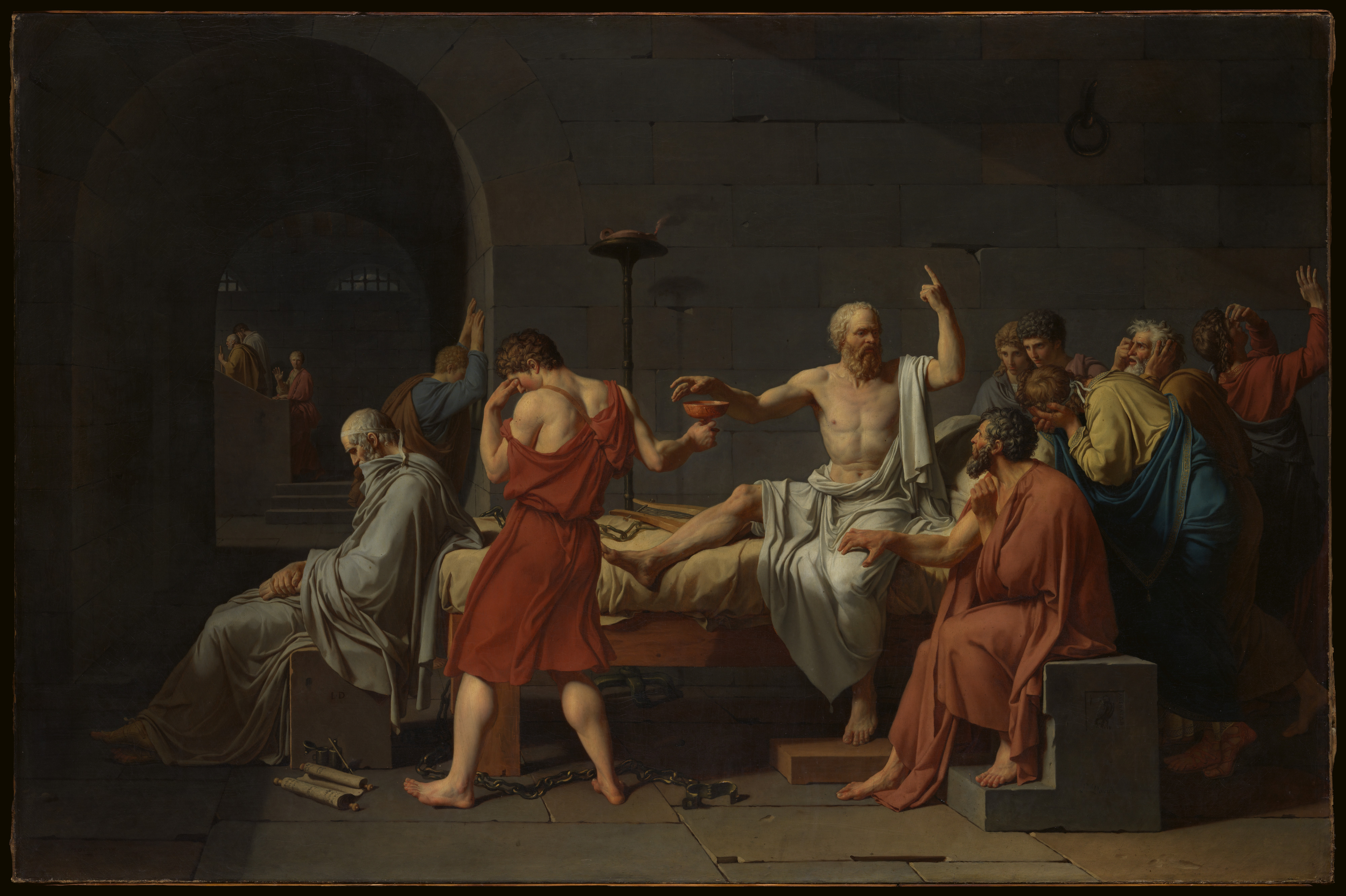
Socrates reaches towards the cup, surrounded by his disciples, in David’s painting.
$29 + shipping18″ × 12″ · Unframed
Jacques-Louis David · The Met, 31.45 · CC0 / Met Open Access. Collection details

Jacques-Louis David · 1787

The Death of Socrates

A scene that brings us back to Socrates’ questions.

US$29 plus shipping · 18 × 12-inch paper (45.7 × 30.5 cm), unframed

Unframed
18 × 12-inch paper (45.7 × 30.5 cm) · US$29 plus shipping
Framed
Planned option · Price to be confirmed
About the artist and artwork

Author and context

Jacques-Louis David (Paris, 1748–Brussels, 1825) was a central figure in French Neoclassicism. He returned to stories from antiquity to depict moral conflicts that also concerned his own time. In this oil painting, held by the Metropolitan Museum of Art, Socrates prepares to drink hemlock before his disciples.

A reading of the work

The hand reaching for the cup and the finger pointing upwards bring together action and thought. The protagonist’s serenity contrasts with the grief of those around him. At the foot of the bed, the elderly man sitting with his back to the action is Plato. His presence should not be understood as a literal eyewitness account: he did not attend Socrates’ death and was young at the time. David depicts him as an old man, evoking the author who preserved the episode in the Phaedo. The painting thus brings together the death of the teacher and the written memory of his teaching.

Why we chose it

At Árbol Interior, we chose it for this relationship between life, thought and transmission. It allows us to pause over the consistency between our convictions and our actions, and the way a conversation can continue long after those who began it.

Sources

Status of this print

4,000 × 2,663-pixel file, visually compared with the Met original; the RGB pixels match. Rights: CC0 / Met Open Access. At 18 × 12 inches, it provides approximately 222 pixels per inch. The image is not a print proof.

Planned format: 18 × 12-inch paper, unframed. Paper type, supplier, costs, taxes, shipping and a physical proof still need to be verified. Sales remain disabled.
Aristotle with a Bust of Homer, by Rembrandt
Rembrandt · The Metropolitan Museum of Art · Public domain (Open Access/CC0). Source and rights

Rembrandt · 1653

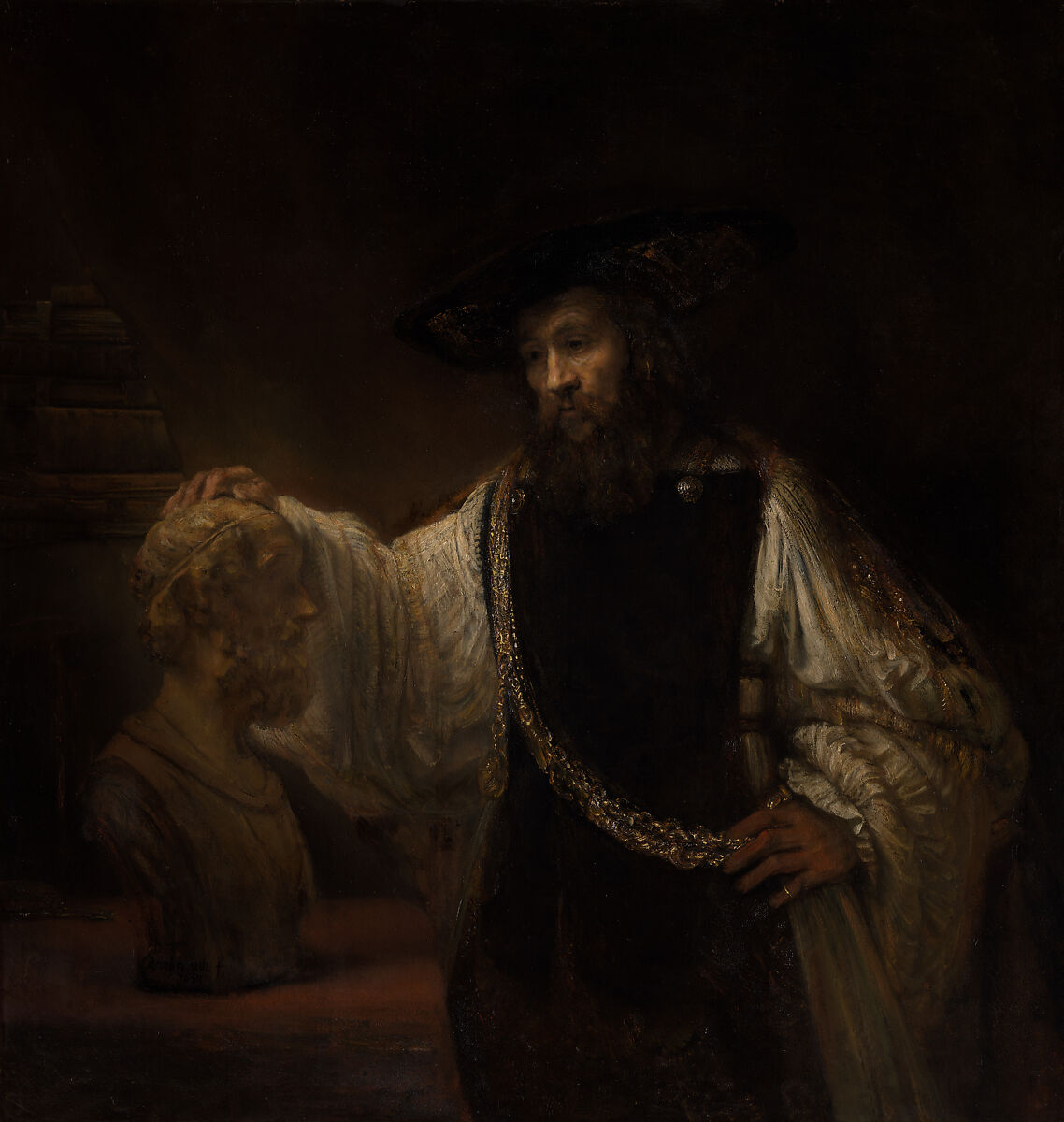
Aristotle with a Bust of Homer

The meeting of reflection and poetry.

Price to be confirmed

Unframed
Planned option · Price to be confirmed
Framed
Planned option · Price to be confirmed
About the artist and artwork

Author and context

Rembrandt van Rijn (Leiden, 1606–Amsterdam, 1669) was a Dutch painter, draughtsman and printmaker. His portraits and scenes explore human experience through gesture and light. He painted this work for a Sicilian patron. It now belongs to the Metropolitan Museum of Art.

A reading of the work

Aristotle rests one hand on the bust of Homer and wears a medal bearing the image of Alexander the Great, his pupil. The philosopher appears between the poet and the ruler, between cultural heritage and the recognition associated with power. We are not looking at a historical encounter: Homer lived centuries earlier. The museum suggests reading this relationship as a comparison between worldly success and the enduring presence of poetry. The absorbed gaze and the touch of the hand invite us to linger over this tension, without turning it into a definitive answer.

Why we chose it

We chose it because it connects philosophy, art and literature in a single image. Within Árbol Interior, it can accompany reflection on what we value: the recognition we receive, the works that shape us and what we choose to devote our attention to.

Sources

Status of this print

Digital reproduction from the Met, public domain. Preview only; this is not a print proof or a production-ready master file.

Sizes, materials, supplier, costs, taxes, shipping and physical proof are pending. These options are not yet available to buy.

Preview pending

Raphael · 1509–1511

The School of Athens

A conversation between great figures in the history of thought.

Price to be confirmed

Unframed
Planned option · Price to be confirmed
Framed
Planned option · Price to be confirmed
About the artist and artwork

Author and context

Raphael (Urbino, 1483–Rome, 1520) was born in the Duchy of Urbino, in what is now Italy. He was a Renaissance painter and architect. He painted this fresco for the rooms of Pope Julius II, a pontiff and major patron of the arts, in the Vatican’s Apostolic Palace. It is part of the Stanza della Segnatura.

A reading of the work

Monumental architecture brings together thinkers from different periods. At the centre, Plato holds the Timaeus and points upwards; Aristotle carries the Ethics and extends his hand towards the world they share. Around them, some read, others calculate and others converse. The scene offers an image of knowledge as a plural activity. Some figures have widely accepted identifications; others remain disputed. The whole is best viewed as an intellectual composition of the Renaissance, without mistaking it for a gathering that actually took place.

Why we chose it

For Árbol Interior, the fresco expresses a way of approaching philosophy: reading others, bringing different perspectives into dialogue and learning through conversation. The diversity of gestures reminds us that thinking requires attention, study and conversation.

Sources

Status of this print

Two versions of the same artwork, not two products: Raphael in colour, with reproduction rights pending; and Giorgio Ghisi’s engraving (1550), recorded as Public Domain at the Städel according to earlier research, with the file still to be added and verified.

Sizes, materials, supplier, costs, taxes, shipping and physical proof are pending. These options are not yet available to buy.

The Great Wave, by Katsushika Hokusai
Katsushika Hokusai · The Metropolitan Museum of Art · Public domain (Open Access/CC0). Source and rights

Katsushika Hokusai · ca. 1830–1832

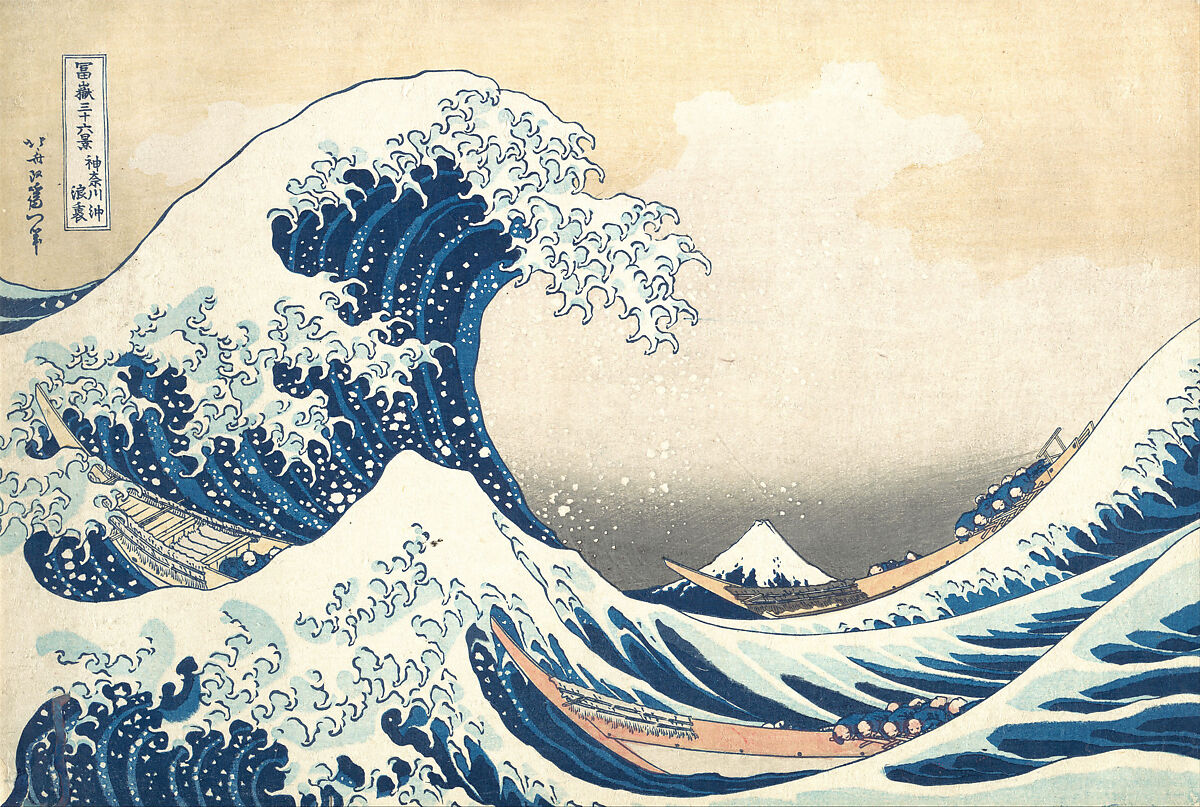
The Great Wave

The movement of the sea and the scale of human life.

Price to be confirmed

Unframed
Planned option · Price to be confirmed
Framed
Planned option · Price to be confirmed
About the artist and artwork

Author and context

Katsushika Hokusai (Edo, now Tokyo, 1760–1849) was a Japanese artist celebrated for his prints, drawings and illustrated books. Under the Wave off Kanagawa, known as The Great Wave, belongs to the series Thirty-six Views of Mount Fuji. It is a woodblock print made with ink and colour on paper.

A reading of the work

The wave dominates the image as the boats adapt to its movement. In the distance, Mount Fuji seems small, although its stable form structures the horizon. Perspective alters our perception of dimensions and brings two scales together: the urgency of those at sea and the continuity of the landscape. From a philosophical perspective, this contrast allows us to think about human vulnerability and the limits of control. This is an interpretation proposed on the basis of the image, not a doctrine attributed to Hokusai.

Why we chose it

We include it because it opens a conversation about our relationship with nature. Its visual power invites us to look closely at what is greater than ourselves and to recognise that understanding the world also requires reconsidering the position from which we observe it.

Sources

Status of this print

Digital reproduction from the Met, public domain. Preview only; this is not a print proof or a production-ready master file.

Sizes, materials, supplier, costs, taxes, shipping and physical proof are pending. These options are not yet available to buy.

Wheat Field with Cypresses, by Vincent van Gogh
Vincent van Gogh · The Metropolitan Museum of Art · Public domain (Open Access/CC0). Source and rights

Vincent van Gogh · 1889

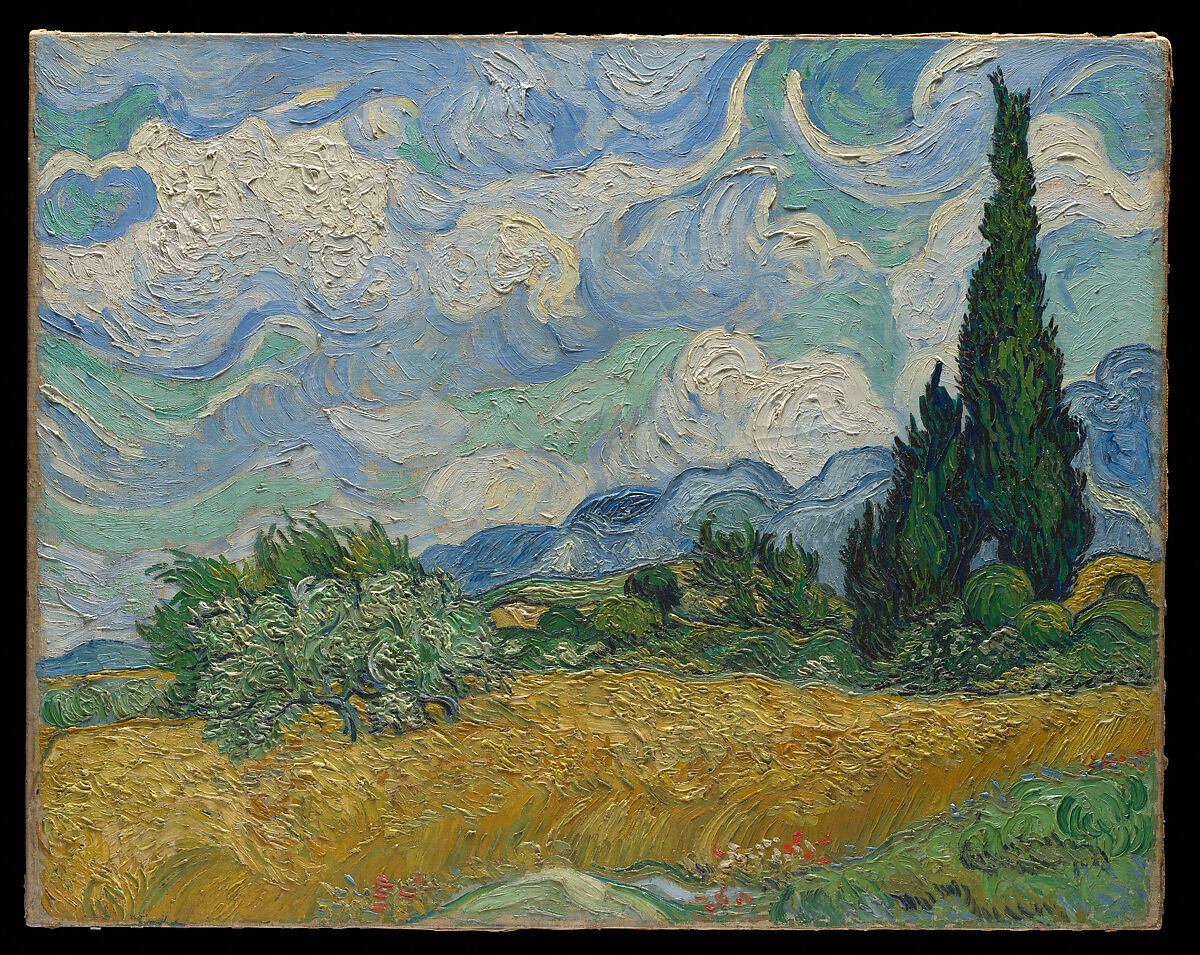
Wheat Field with Cypresses

A landscape to linger over.

Price to be confirmed

Unframed
Planned option · Price to be confirmed
Framed
Planned option · Price to be confirmed
About the artist and artwork

Author and context

Vincent van Gogh (Zundert, 1853–Auvers-sur-Oise, 1890) was a Dutch painter whose work made colour and brushwork intensely personal means of expression. The version held by the Metropolitan Museum of Art was painted outdoors, near Saint-Rémy, in late June 1889. He later made other versions in the studio.

A reading of the work

The wheat, cypresses and clouds take part in a movement that runs through the landscape. The brushwork leaves the work of the hand visible: looking at the painting means paying attention both to what is depicted and to the way it is depicted. From this observation, we can think about perception. A landscape changes according to the light, the place and the attention of the person looking at it. The work allows us to explore this relationship without reducing its power to explanations about the artist’s health or turning it into an illustration of his biography.

Why we chose it

At Árbol Interior, we chose it for its ability to renew our view of everyday life. It offers a pause before the visible world and reminds us that sensibility also plays a part in the way we know.

Sources

Status of this print

Digital reproduction from the Met, public domain. Preview only; this is not a print proof or a production-ready master file.

Sizes, materials, supplier, costs, taxes, shipping and physical proof are pending. These options are not yet available to buy.

Preview pending

Claude Monet · 1899

The Japanese Footbridge

Light, water and an invitation to contemplate.

Price to be confirmed

Unframed
Planned option · Price to be confirmed
Framed
Planned option · Price to be confirmed

Editorial text pending verification of the exact reproduction: National Gallery of Art, 1899, inventory 1992.9.1.

Status of this print

Image still to be added and verified.

Sizes, materials, supplier, costs, taxes, shipping and physical proof are pending. These options are not yet available to buy.

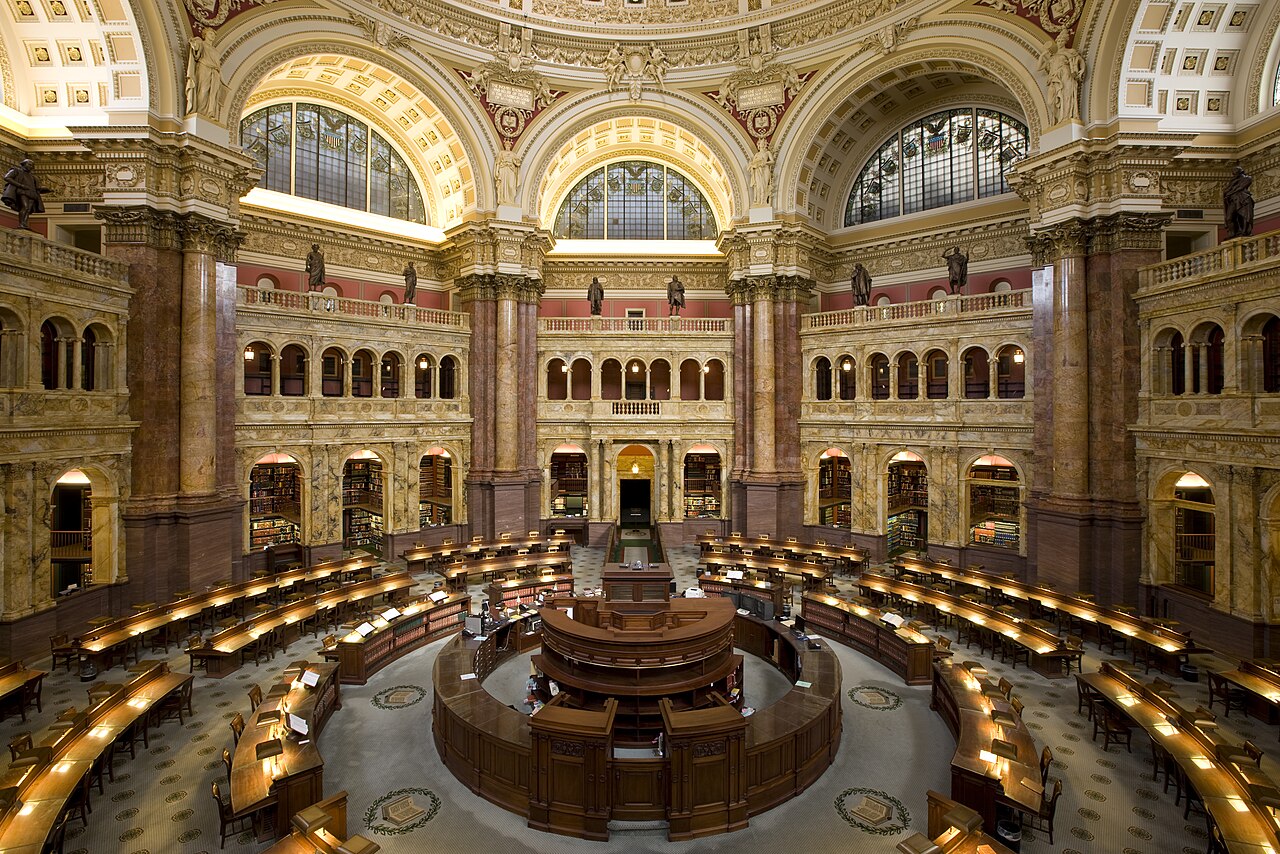
Tables and architecture in the Main Reading Room of the Library of Congress.
Photograph: Carol M. Highsmith · Library of Congress · No known restrictions. Institutional record

Carol M. Highsmith

Main Reading Room of the Library of Congress

Price to be confirmed

About the artist and artwork

Author and context

Carol M. Highsmith (United States, 1946) is a photographer who has extensively documented American architecture and cultural life. This photograph from 2009 shows the Main Reading Room of the Library of Congress’s Thomas Jefferson Building in Washington, D.C., from above.

A reading of the work

The arrangement of the desks guides the eye towards a shared space. Reading, which we tend to imagine as an individual activity, appears supported by architecture and an institution dedicated to preserving knowledge and making it available for consultation. The photograph allows us to connect the silent work of each reader with a collective task that spans generations. This relationship is our editorial reading of the image; it does not imply that the institution endorses the project.

Why we chose it

We chose it because a library represents a central possibility for Árbol Interior: encountering voices from other times and broadening our world through reading. The image brings together study, memory and community without losing the personal nature of each journey.

Sources

Status of this poster

1,280 × 854-pixel web preview. The high-resolution original and print proof still need to be added and verified.

The frame shown is a visual mock-up, not a confirmed purchase option. Materials, supplier and shipping are pending.

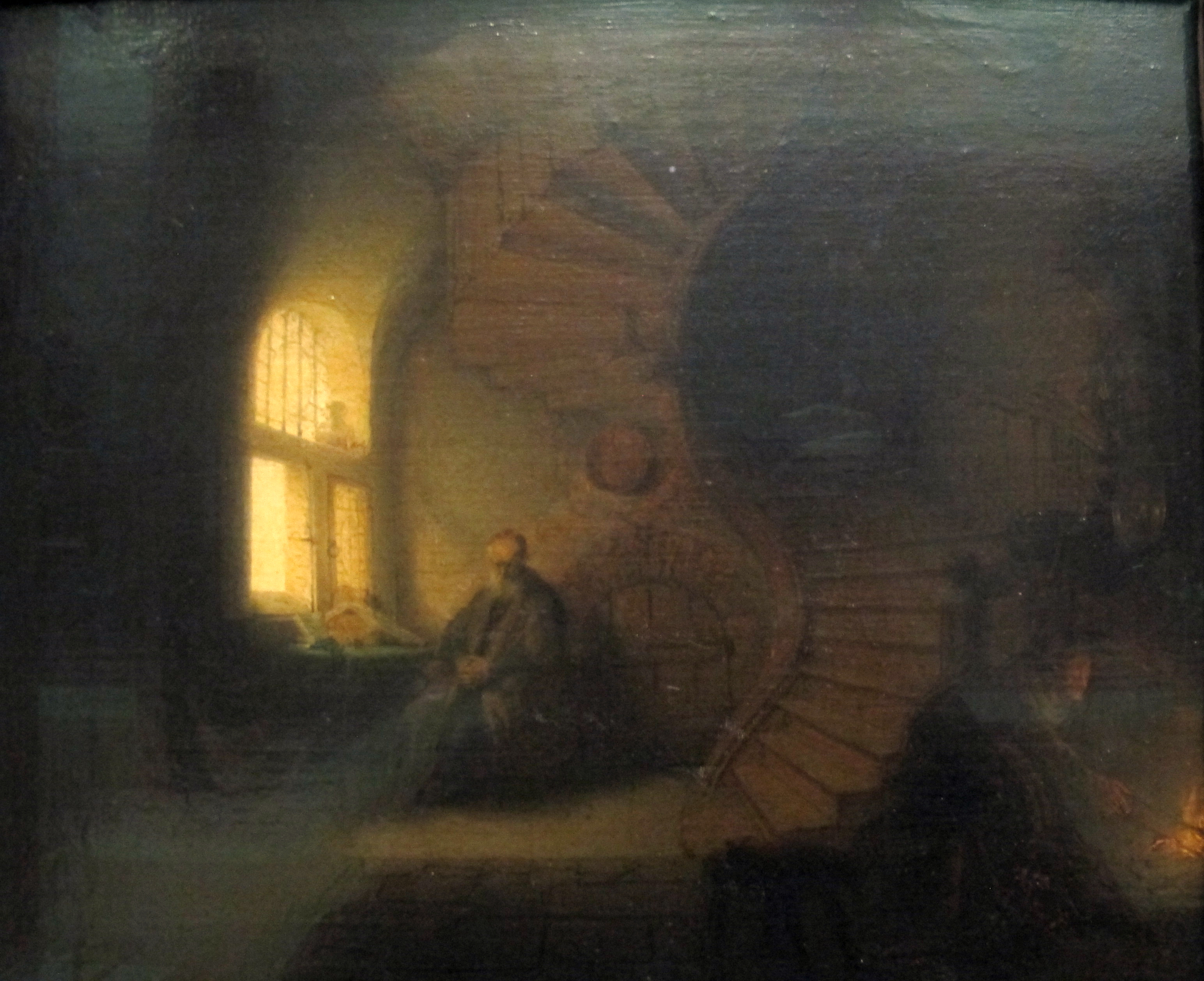
A philosopher beside a window and a spiral staircase in Rembrandt’s painting.
Rembrandt, 1632 · Photograph: Sailko / Wikimedia Commons · CC BY 3.0. Uncropped image; decorative preview mock-up, without the photographer’s endorsement.

Rembrandt

Philosopher in Meditation

Price to be confirmed

About the artist and artwork

Author and context

Rembrandt van Rijn (Leiden, 1606–Amsterdam, 1669) explored the intimacy of spaces and the human presence in his painting. This small oil painting on wood belongs to the Louvre’s collection. The museum calls it Philosopher in Contemplation and notes that it was also long known as Philosopher in Meditation.

A reading of the work

The title is traditional and dates from the eighteenth century; it does not allow us to be certain that the figure was conceived as a philosopher. We see two figures, a window, an area with a fire and a spiral staircase that structures the interior. Light and shadow distribute our attention between what is visible and what we can barely make out. We can read this experience as an invitation to contemplation, while always distinguishing our interpretation from the historical identity of the figure and from any documented intention of the painter.

Why we chose it

At Árbol Interior, we selected it for the space of inward reflection it offers the viewer. It can accompany reading and study as an image of sustained attention, without our needing to attribute a doctrine or a single meaning to it.

Sources

Status of this poster

3,088 × 2,516-pixel file. Not validated for fine-art printing at 36 × 24 inches; final size and physical proof are pending.

The frame shown is a visual mock-up, not a confirmed purchase option. Materials, supplier and shipping are pending.

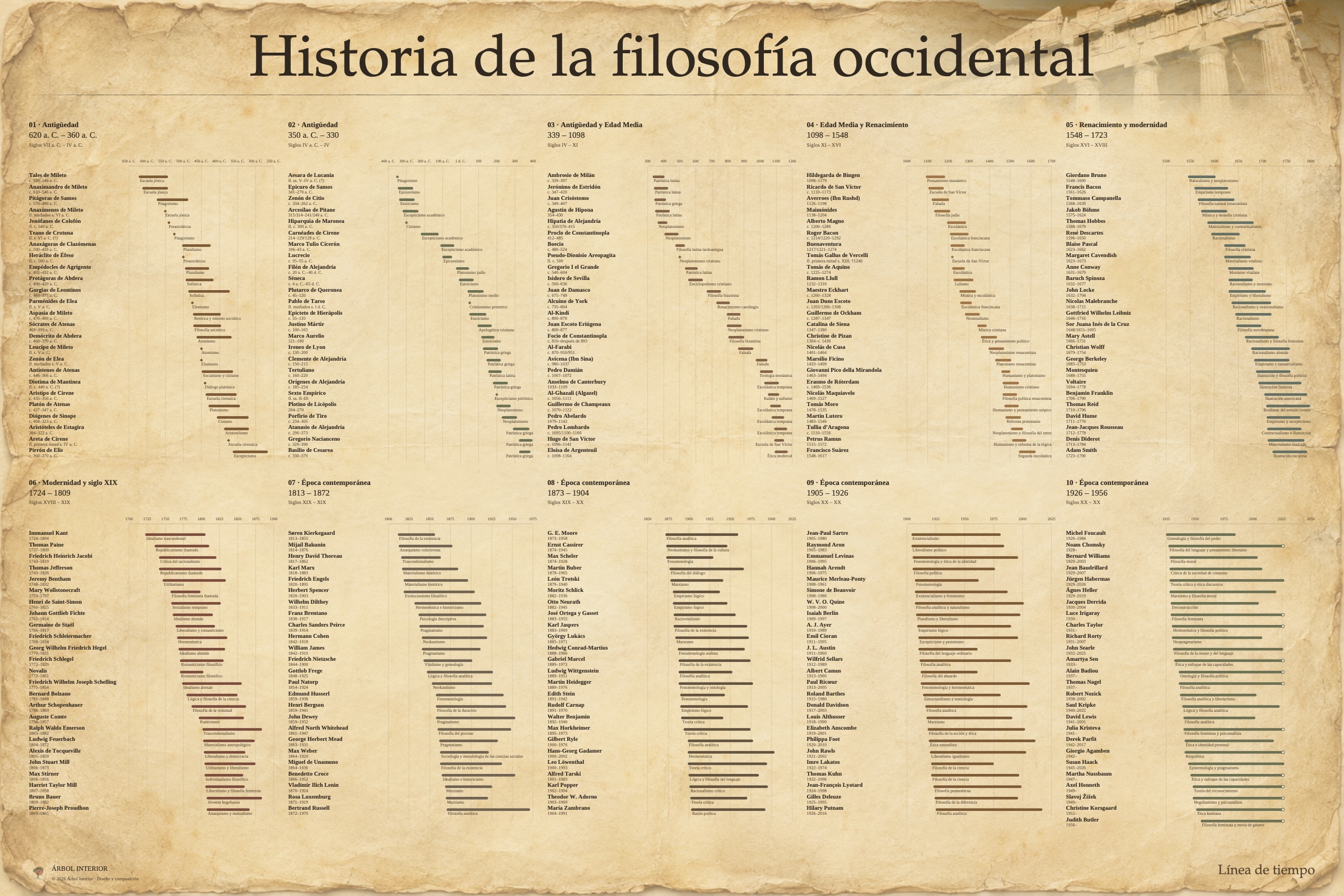
History of Western Philosophy: complete map with ten timelines.$39 + shipping36″ × 24″ · Unframed
Enlarge the map ↗

Map · 251 philosophers

History of Western Philosophy

A map for exploring thinkers and connections.

US$39 plus shipping · 36″ × 24″ (91.4 × 61 cm), unframed

Unframed
36″ × 24″ (91.4 × 61 cm) · US$39 plus shipping
Framed
Planned option · Price to be confirmed
About the artist and artwork

Author and context

This timeline brings together names and schools of Western philosophy in a visual composition designed to support study. The reproduction currently included in the catalogue bears the credit “© 2026 Árbol Interior · Design and composition”. This credit identifies the graphic work, without attributing the ideas or traditions represented to the project.

A reading of the work

A map allows us to place authors in context, recognise contemporaries and observe the continuity of certain questions. It is also selective: a timeline cannot contain the full complexity of a tradition or explain the relationships between its thinkers on its own. Visual proximity helps us find our bearings, but does not prove influences or replace reading the works themselves. Its usefulness emerges when it accompanies a question and helps us better locate the context in which that question was formulated.

Why we chose it

It is part of Árbol Interior as a tool for orientation and curiosity. It can accompany a study notebook, a conversation or a reading, offering points of reference for further exploration without turning the history of philosophy into a closed list.

Status of this print

Full view of the PDF supplied for the project. This is not a print proof.

Planned format: 36″ × 24″ (91.4 × 61 cm), unframed. Materials, supplier, costs, taxes, shipping and a physical proof still need to be verified. Sales remain disabled.
Before sales open

We will confirm the files and reproduction rights, supplier, sizes and materials, options, costs, taxes and shipping. Each print will need a physical proof before its price and availability are finalised.