 Árbol InteriorThe project Español
Life of Pi: the story we choose to believe
A journey through fear, instinct, and faith, where the tiger, the sea, and farewells invite us to ask what sustains us.
Warning: this article discusses the film’s ending.
A boy, a boat, and a tiger. At first glance, it seems like a survival story. But as we move through Life of Pi, we also encounter questions that stay with us long after the film ends. How do we keep going when everything familiar disappears? What do we do with fear? What place do reason, faith, and the stories we create have in understanding what we live through?
Ang Lee’s film, released in 2012 and based on Yann Martel’s novel, takes us out onto the ocean with Pi Patel and a Bengal tiger named Richard Parker. Let us remember that name: we will return to it later, because its story opens another door into this journey.
Here at Árbol Interior, we can approach this journey with curiosity. Its images allow different readings, and perhaps part of their power lies in letting us enter with our own doubts. Let us sail together between what happens on screen and what those scenes awaken in us.
The search before the shipwreck
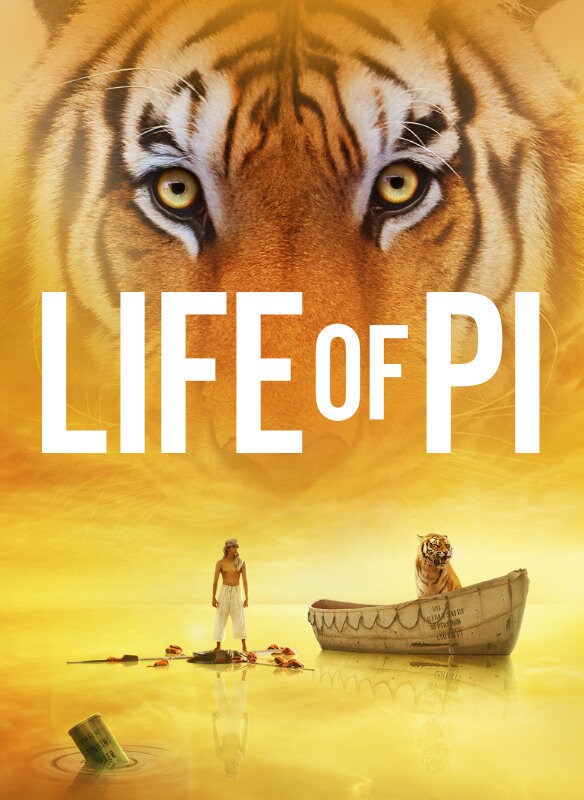
Since childhood, Pi has searched for God in different places. He approaches Hinduism, Christianity, and Islam with a desire to understand and to love. His search coexists with his father’s practical outlook, which reminds him of the importance of clear thinking, and with his mother’s sensitivity, which accompanies his questions.
In that family, we find a tension many of us know: we want to understand the world, but also to feel that our lives have meaning. Reason helps us recognize risks, distinguish facts, and make decisions. Faith, for those who live by it, can offer a way through what we do not yet understand.
Pi grows up among the animals in his family’s zoo. There he meets Richard Parker and learns that a wild animal’s beauty coexists with its danger. That lesson will carry decisive weight when he has to share a space with him from which neither can escape.
When everything familiar disappears
The family decides to leave India and emigrate to Canada. They travel with the animals aboard the Tsimtsum. The name brings to mind tzimtzum in the Kabbalistic tradition, associated with the contraction or withdrawal of divine light to make room for creation. We can take that resonance as an invitation to think about emptiness and absence without turning it into a definitive explanation of the film.
One night, the ocean was no longer calm. The storm shook more than the ship… it shook everything Pi knew. The roar of the water. The crash of the wind. And suddenly… separation. In a single second, life became something else.
After the shipwreck, Pi finds himself in a lifeboat with an injured zebra, a hyena, an orangutan, and the tiger. Violence puts an end to the other animals. Eventually, only Pi and Richard Parker remain.
The ocean fills the entire horizon. Pi has lost his family and the certainties of his former life. Sometimes we can recognize something of that exposure in grief, a breakup, or an unexpected change: we are still ourselves, but the everyday world no longer has the same shape.
Living with our tiger
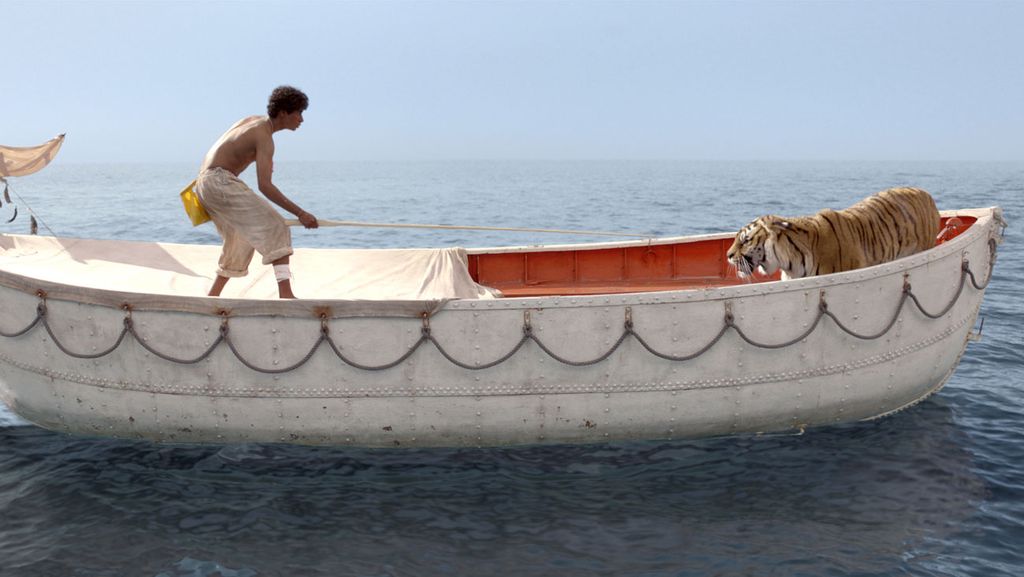
At first, Pi tries to keep his distance. He builds a small raft tied to the boat, watches the tiger, and looks for resources to survive. He is afraid, hungry, and thirsty. He prays, calculates, learns, and tries again.
As the days pass, he discovers that he needs to establish boundaries and a way of living alongside Richard Parker. Caring for the animal also forces him to get organized, stay alert, and keep up a task. The tiger remains dangerous, but his presence becomes part of what keeps Pi going.
Is the tiger his danger… or the guardian of something he does not yet understand?
We can read him as an image of instinct, fear, or that part of ourselves that emerges when we feel cornered. After a loss, for example, anger sometimes takes up so much room that it is hard to hear any other emotion. Recognizing it and setting limits on it can help us decide how to act without letting it govern every gesture.
The film lets us ask how we live with what we feel. When do we need to protect ourselves? When does fear keep us alert, and when does it prevent us from living? What helps us regain a sense of direction when everything seems to come down to enduring?
Richard Parker: a name with a history
Let us return to the name we left waiting. In Pi’s account, the tiger was originally called Thirsty. Richard Parker was the hunter’s name. A mix-up in the paperwork switched the two names, and the animal ended up bearing a human name.
There is also a literary and historical coincidence. In The Narrative of Arthur Gordon Pym, published by Edgar Allan Poe in 1838, a Richard Parker appears in connection with an episode of shipwreck and cannibalism. Decades later, in 1884, a young man of the same name was killed by fellow survivors of the Mignonette shipwreck, who resorted to cannibalism to survive. Newspapers at the time already noted the coincidence.
That background makes the tiger’s presence more unsettling and brings us closer to the boundary between humanity and survival. It also prepares a question that will return at the end: what are we capable of doing when we feel our life is in danger, and how do we later find words to tell it?
Light, silence, and the island
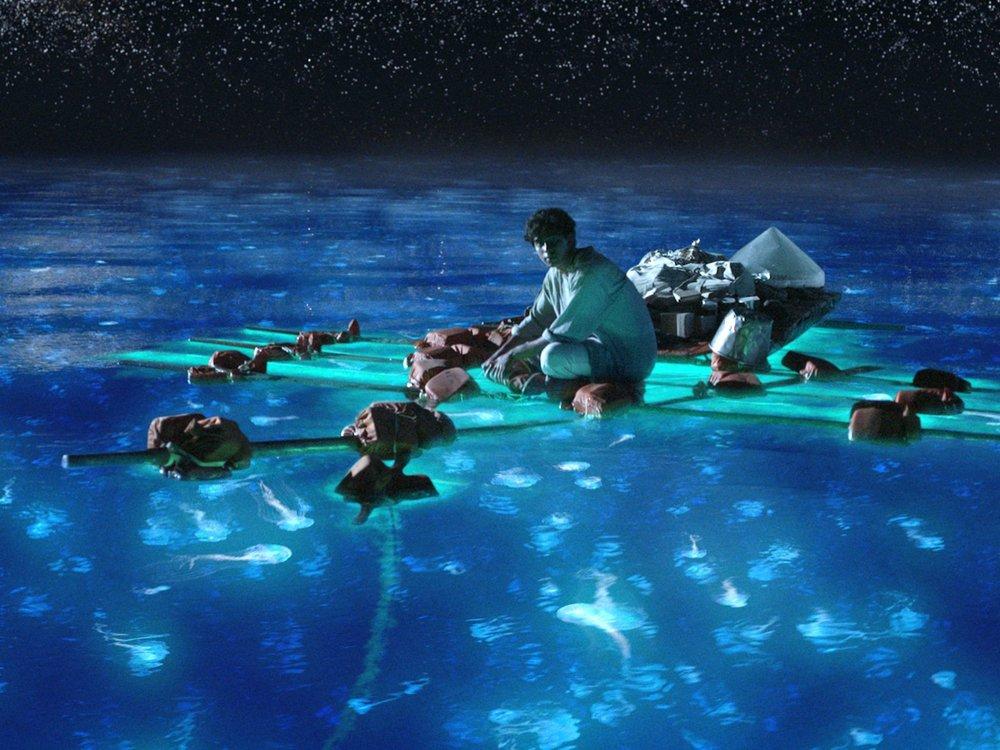
The journey also has moments of unforgettable beauty: water glowing in the night, a sky that seems to stretch into the ocean, an immensity that for a moment no longer feels solely threatening. Pi gazes, marvels, and finds pauses within his anguish.
We can recognize something simple there: even during a painful time, a moment of relief sometimes appears. A conversation, someone’s presence, or an instant of calm allows us to catch our breath. The pain remains real, and so does that small respite.
Then comes the island. There is food, water, and apparent safety. Pi and Richard Parker regain their strength, but at nightfall the place reveals its danger. Staying there would ultimately destroy them. Pi must return to the sea.
Sometimes what seems like refuge… is only oblivion disguised as rest.
The image invites us to reconsider where we are staying and why. We might think of a routine that protects us from change but takes us away from what we want to build. The question requires care: rest is part of the journey too. Does that place allow us to recover so we can continue, or does it make us give up, little by little, on what matters to us?
The farewells that never come
When the boat reaches land in Mexico, Pi is exhausted. Richard Parker walks toward the jungle and disappears without looking back. Pi had expected a gesture, a pause, some sign acknowledging what they had lived through together. That moment never comes.
The scene touches a deeply human experience: the desire for an important story to have a farewell worthy of it. Sometimes someone leaves without explaining what happened. Or a chapter ends before we can understand how much it had transformed us.
We are left to learn to live with that incomplete ending. We can be grateful for what we shared, acknowledge what hurt, and admit what we still do not understand. The imprint of a relationship or an experience can stay with us even if we never receive the words we hoped for.
Two stories and an open question
After his rescue, Pi recounts his journey to the shipwreck investigators. They find his story with animals difficult to accept. He then offers another version, involving human beings and marked by much more direct violence.
The film leaves us with two accounts and a question: which would we rather believe?
From here, we can think about how we tell our own experiences. The same loss may appear in our memory as a wound, a turning point, an injustice, or a search we do not yet know how to name. The words we choose influence how we remember and how we go on living.
Facts matter. At the same time, we seek a meaning that allows us to live with what we have been through. Pi’s ambiguity opens that space for reflection and lets each of us examine what we find in the story: faith, imagination, pain, hope, or questions that still have no answer.
What sustains us
Do we survive because we are strong?
We may discover a strength we did not know before. Sometimes it takes the form of solving a problem; at other times, asking for help, accepting company, or getting up to do what is needed that day. Pi moves forward through concrete decisions and moments of despair. His fragility is part of the journey too.
Or because something greater sustains us, even in the darkness?
For some of us, that support bears the name of God. For others, it appears in love, in a community, or in a sense of belonging that allows us to continue. We can explore that question through our own experience without imposing an answer on those who experience mystery differently.
Are we only body, reason, and instinct?
The body needs food and rest. Reason helps us assess what is happening. Instinct alerts us. Pi needs all of that to stay alive, while his inner life continues to search for direction in the middle of the ocean.
Or is there something, an intuition, a faith, an eternal spark, that guides us even though we cannot see it?
Perhaps that question will stay with us beyond the film. We can leave it open and notice what gives us hope, what helps us act with care, and what stories allow us to get through our own shipwrecks.
The story we choose to believe may not change the facts, but it can change how we walk alongside them. At the end of Life of Pi, we still have questions. Perhaps that is where our part of the journey begins.
Thank you for making it this far. I thank you from the heart. At Árbol Interior, we continue exploring together the meeting points between science, philosophy, and spirituality so we can look more deeply at our existence.
What does Richard Parker represent for us? What part of this journey stays with us today? If you feel moved to, leave your reflection and share this article so that more people can join this independently run journey of wisdom.
See you soon.