Philosophy and Art · Photography
28 days, photographs and stories: childhood on Luis Marval’s streets
In February 2018, a daily photography prompt took Luis Marval through Punto Fijo and other places in Venezuela’s Paraguaná region. The result was a diary of encounters in which play, work, waiting and need share the space of the street.
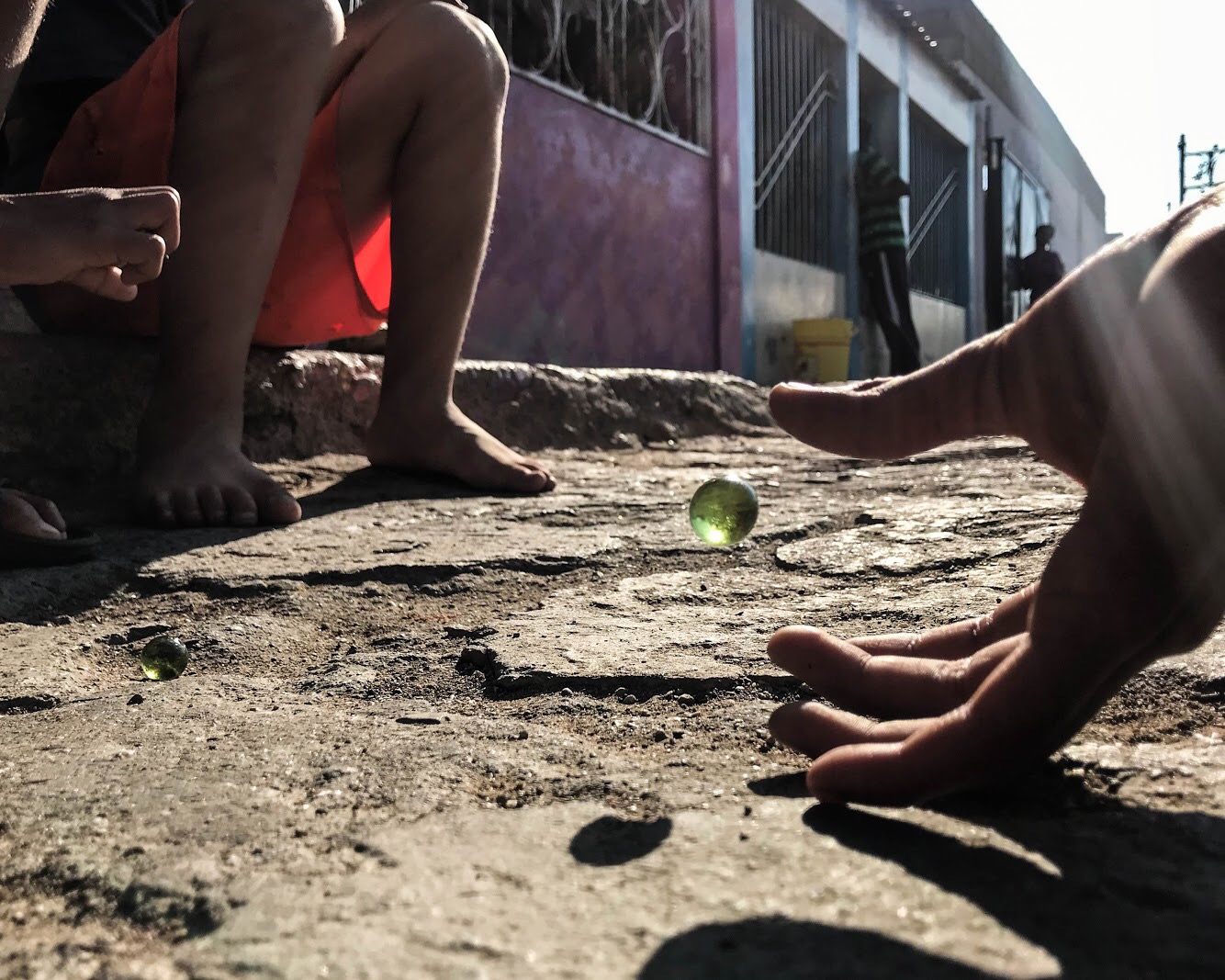
A green marble gleams on the asphalt. Around it are hands, legs and the shadows of those who have gathered to play. The camera is so close to the ground that the small object takes centre stage. In the story accompanying the photograph, Luis Marval recalls a conversation with a grandmother watching the children from her doorway. The street serves as a meeting place, while the adults try to keep a safe space for them.
The image belongs to 28 días, fotos y relatos: Los niños en las calles (28 Days, Photographs and Stories: Children on the Streets), a project that began during the Roberto Mata Photography Academy’s “28 days, 28 photographs” challenge. Every morning, a word or phrase posed a visual problem. Marval decided to follow a common thread: the childhood he encountered on his walks through Punto Fijo and Paraguaná, in the state of Falcón.
Eight years later, that work has been brought together in a photobook by Luis Enrique Marval Coll, who was responsible for the photographs, texts, design and editing. The selection presented here takes us through some of those scenes and shows how an exercise in observation became, in its author’s account, an experience of closeness and commitment.
A prompt every morning
The titles retain the unexpected character of the challenge: Un pie de atleta (An Athlete’s Foot), Un maniqueo (A Manichaean), Un retrato hablado (A Spoken Portrait) or Un horizonte caído (A Fallen Horizon). The gap between the prompt and what happens in front of the camera calls for associations to be found. Sometimes the answer lies in a gesture; at other times, in the vantage point or in the conversation that follows.
On the first day, Marval points the camera towards the feet of a young woman selling newspapers between vehicles. The story connects the idea of the athlete with the effort of that daily work. In the photograph, the asphalt fills much of the frame and the cars form a passage around the figure. The title introduces a reading that the image alone could not fully convey.
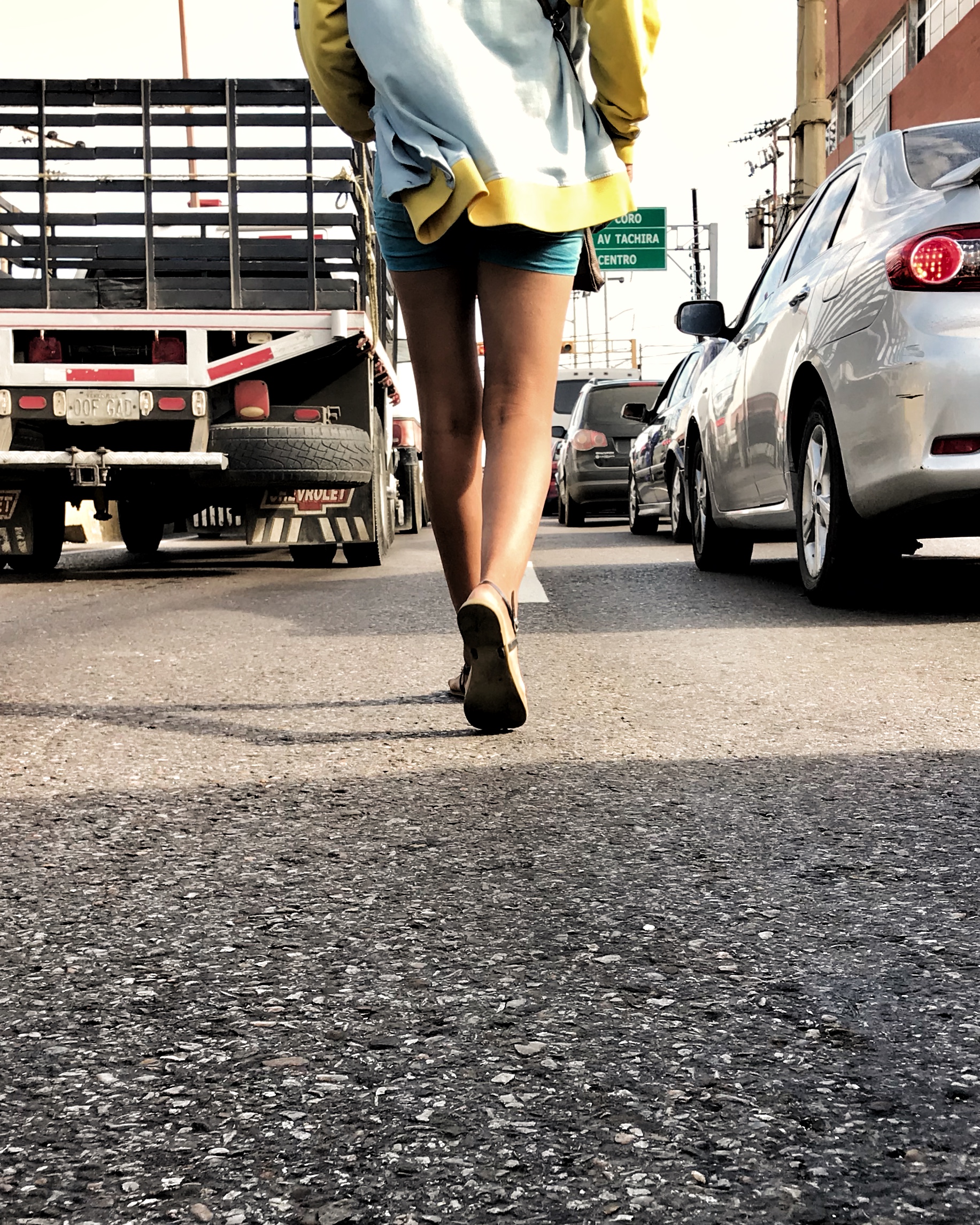
This relationship between photography and writing holds the work together. The stories record conversations, describe what happened outside the frame and reveal the photographer’s hesitations. The first-person voice allows us to follow both the encounters and the limits of what he came to know. The reader meets specific situations, recounted through the experience of someone who was there.
Play, waiting and need
The project brings together different experiences of childhood. Some children play near their homes, others accompany family members, and others work or look for food. These distinctions need to be preserved: a photograph taken in the street does not establish that the person pictured is homeless.
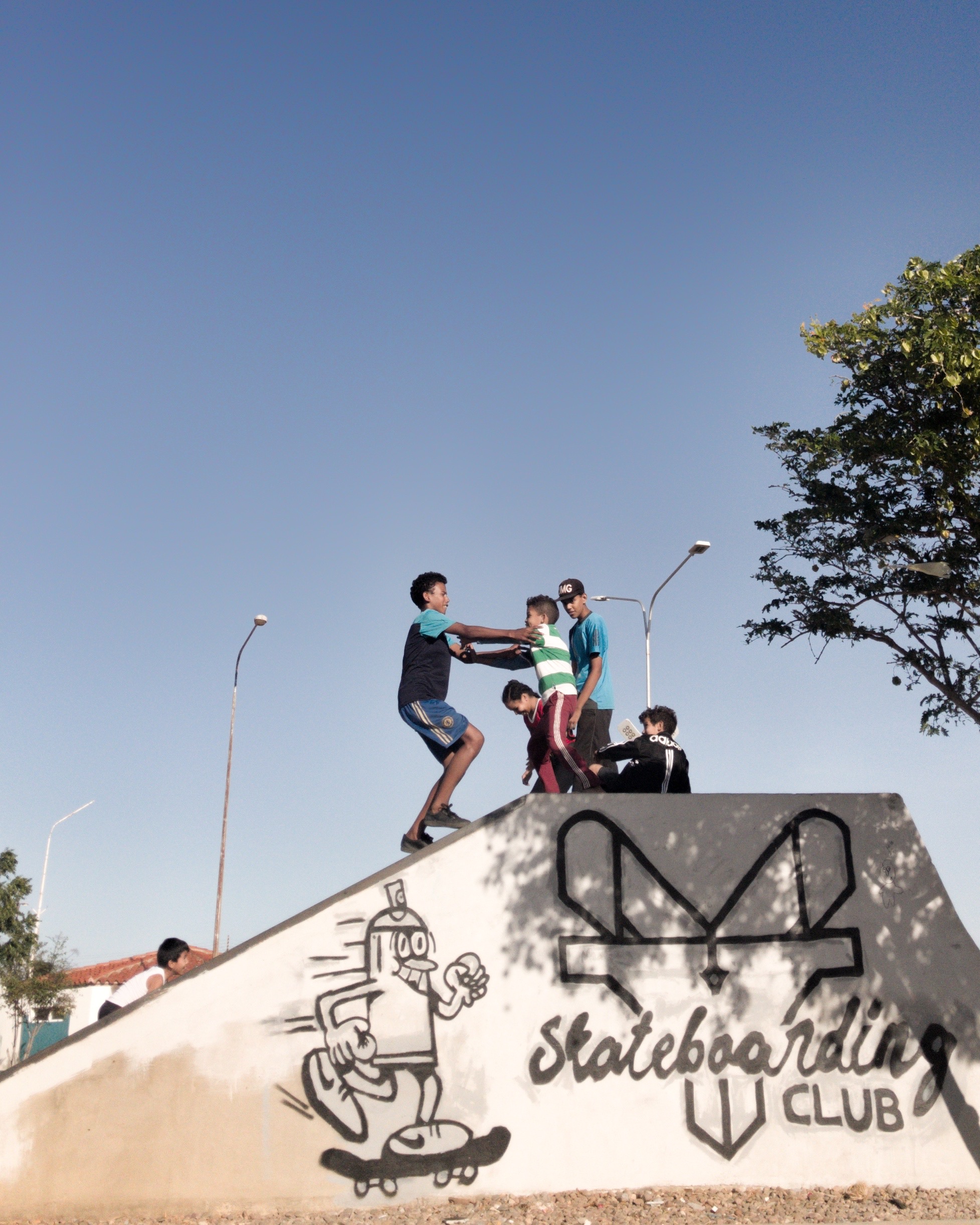
In Un retrato hablado (A Spoken Portrait), the sky fills much of the photograph and a group gathers on a skate ramp. The open space, gestures and camera height give the scene a different energy from that of other pages. Play retains a place of its own within the diary, alongside episodes that speak of precarious circumstances or difficulties in continuing an education.
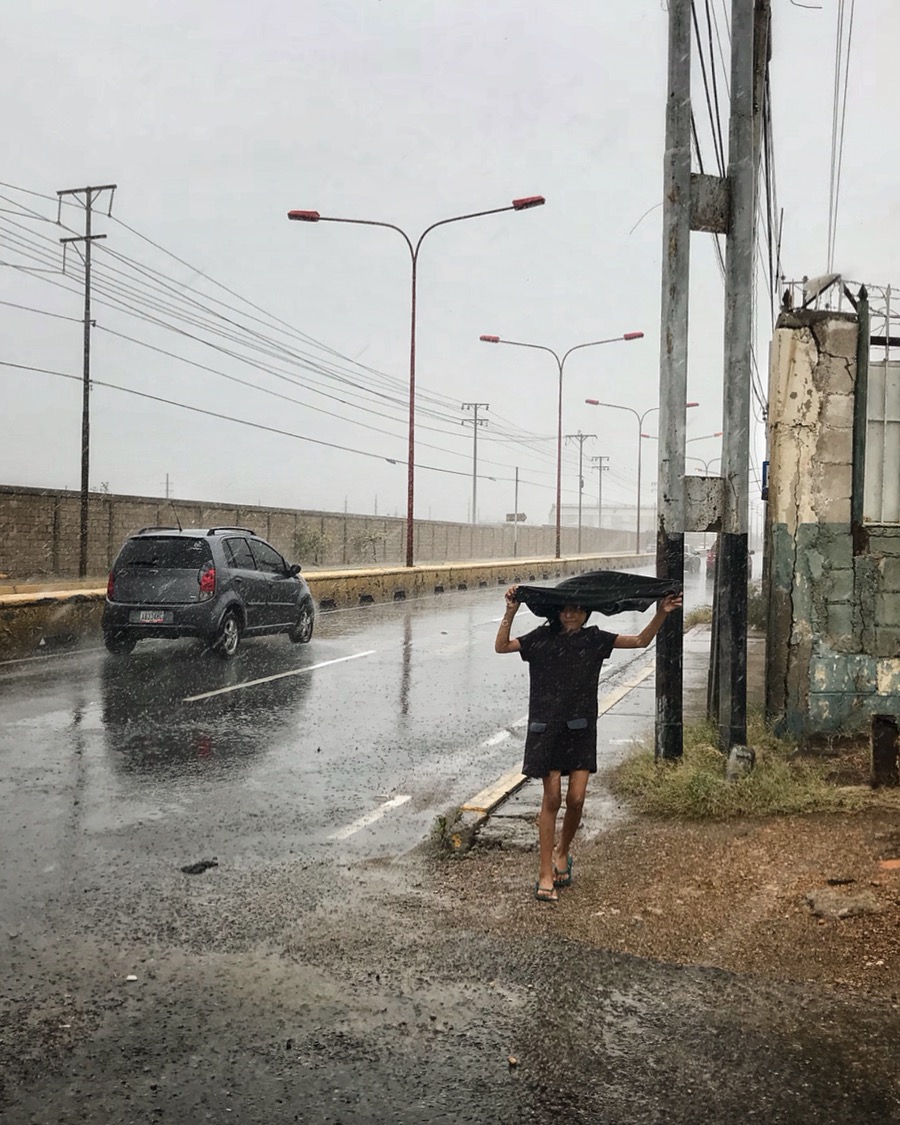
In Un se me está haciendo tarde (An “I’m Running Late”), rain changes the pace. A small figure walks beside a wall, surrounded by water, roadway and vehicles. Marval writes that he did not know where she was going and questions his own response to the scene. That uncertainty is part of the testimony: the text does not turn the photograph into a complete explanation of the life of the person portrayed.
Form also tells the story
Closeness to the ground recurs at several points in the series. In the photograph of the marbles, it reveals the texture of the pavement and brings our gaze down to the level of the game. On the first day, it emphasises the relationship between footsteps and traffic. These framing decisions direct our attention to details that might go unnoticed from an adult’s usual viewpoint.
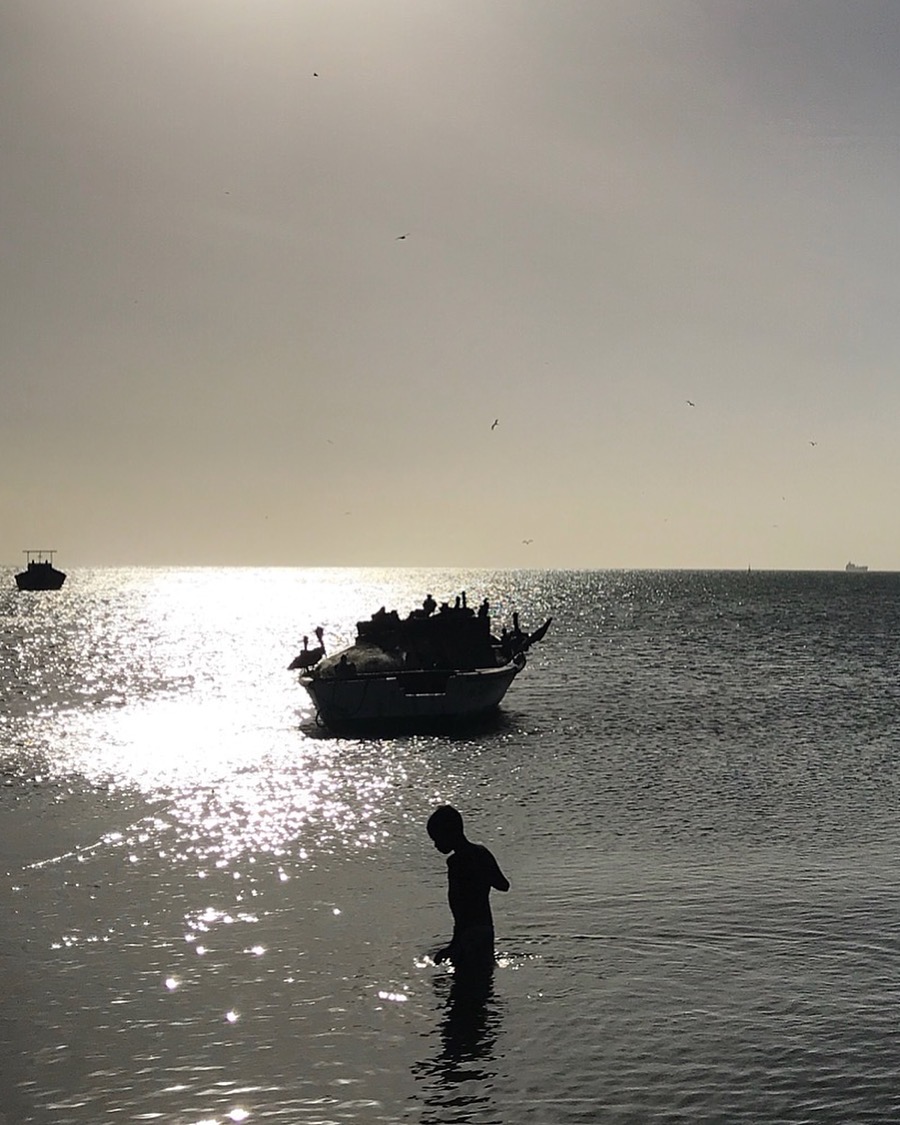
Light serves another purpose in Un maniqueo (A Manichaean). Sunlight reflected on the water contrasts with the dark figures on the shore and in a boat. The story connects the prompt with the difficulty of dividing experience into good and evil. The image offers tones and distances; the text explores an interpretation arising from the encounter.
The exhibition preserves the proportions of these photographs. Seeing the full frame allows us to consider the relationships between bodies and place: how much space the author leaves around a figure, where he positions the horizon and which elements he keeps at the edges.
Seeing a person, not just a scene
In the book’s final pages, Marval clarifies the scope of his work: it is a personal testimony, not a study representing all children in street situations. He also explains that some names and identifying details were changed or omitted to protect privacy, and that conversations and agreement to photographs depended on the circumstances of each encounter.
That clarification matters as we approach the images. A photograph can draw attention and inspire empathy, but it cannot let us know someone completely. Respect for the dignity of those portrayed requires us to preserve the context and avoid turning a scene of hardship into a label that defines them forever.
The stories also show how the photographer ceases to be a distant observer. Encounters recur, conversations continue and small exchanges change the relationship. Marval sums up that movement when he acknowledges that the creative process led him to become involved with the people he was getting to know.
The horizon at the journey’s end
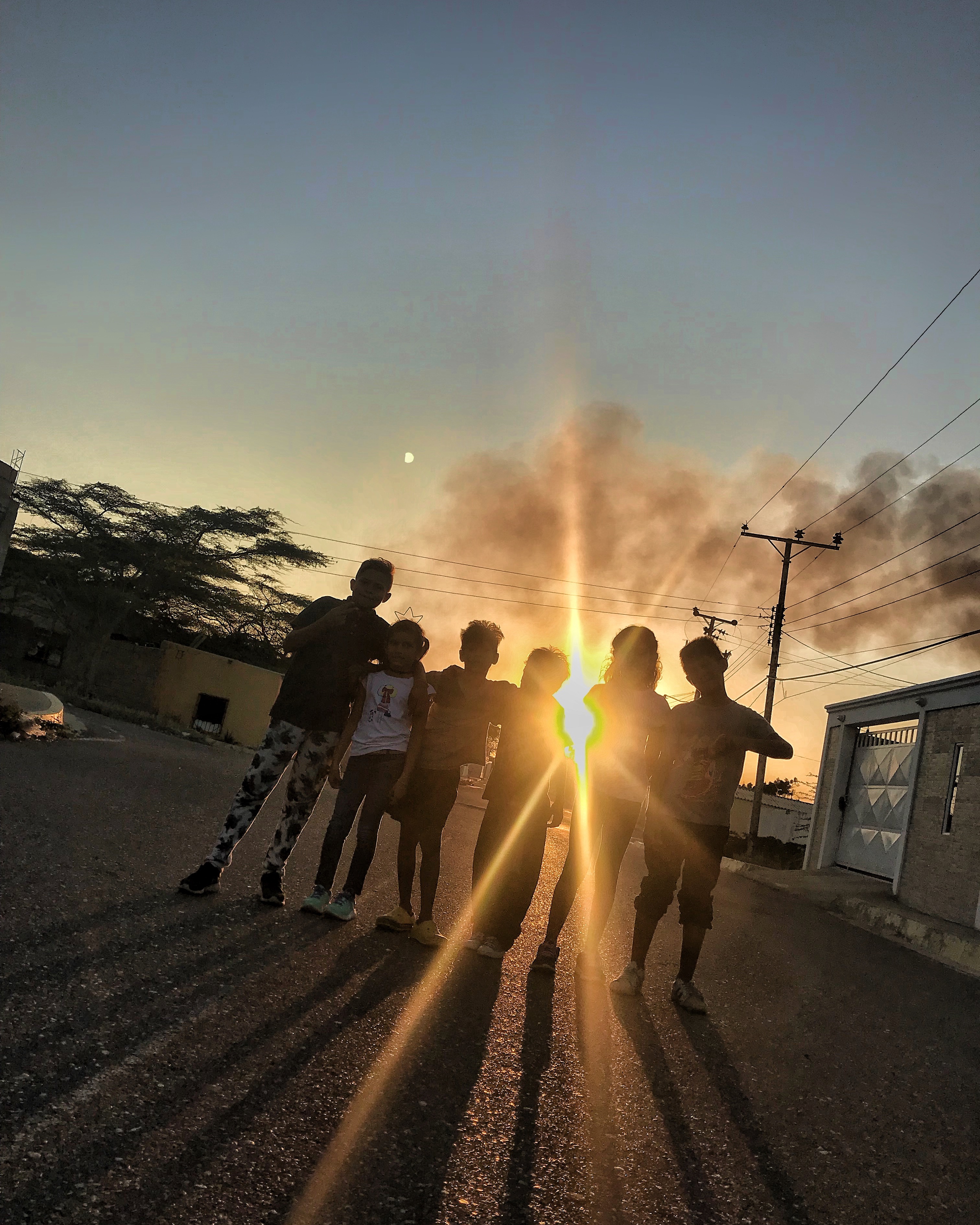
The final prompt of the challenge was Un horizonte caído (A Fallen Horizon). The photograph shows a backlit group and a tilted horizon. In the story, the act of tilting the camera is connected with the search for support and balance. Its opening sentence, “If the horizon falls, we find our balance,” brings together the visual decision and the human experience the author has been recounting.
The twenty-eight prompts came to an end, although the archive includes an additional photograph as an epilogue. The book preserves the sequence of that month and allows us to return to it with the perspective of time. In these images, childhood appears amid ordinary activities and difficult circumstances, with room for play, imagination and relationships with others. The strength of the project lies in sustaining attention to these individual lives and recording the encounters that made each photograph possible.
About this exhibition
An editorial selection of six photographs from 28 días, fotos y relatos: Los niños en las calles (28 Days, Photographs and Stories: Children on the Streets). Original photographs and stories: © Luis Enrique Marval Coll. Series created in February 2018; photobook, first edition 2026. Introductory text and feature: Árbol Interior.
Sources: the complete 74-page photobook and the project’s documentary materials shared by its author. The photographs retain their original titles. This presentation does not reproduce the complete book or make it available for download.